

Oaxaca Drinks: A Complete Guide

KEY TAKEAWAYS
- Must-try Oaxaca Drinks: Tejate, Atole, Hot Chocolate, Cafe de Olla, and Pozontle
- Alcoholic Oaxacan Drinks to Try: Mezcal, Pulque, Tepache
- These traditional Oaxacan drinks can be found in local markets and restaurants that aren’t available outside of this region of Mexico.
“Salud!” is how you say cheers in Mexico which translates to “to your health”. In essence, you are calling for a celebration of each other’s health and well-being!
When visiting Oaxaca, there are so many fun experiences to have that involve drinking both alcoholic and non-alcoholic drinks. From doing a mezcal tasting at a tasting room to sipping on tejate while perusing the market, drinking is part of the culture in this beautiful city.

Must-Try Drinks in Oaxaca
1. Agua Frescas
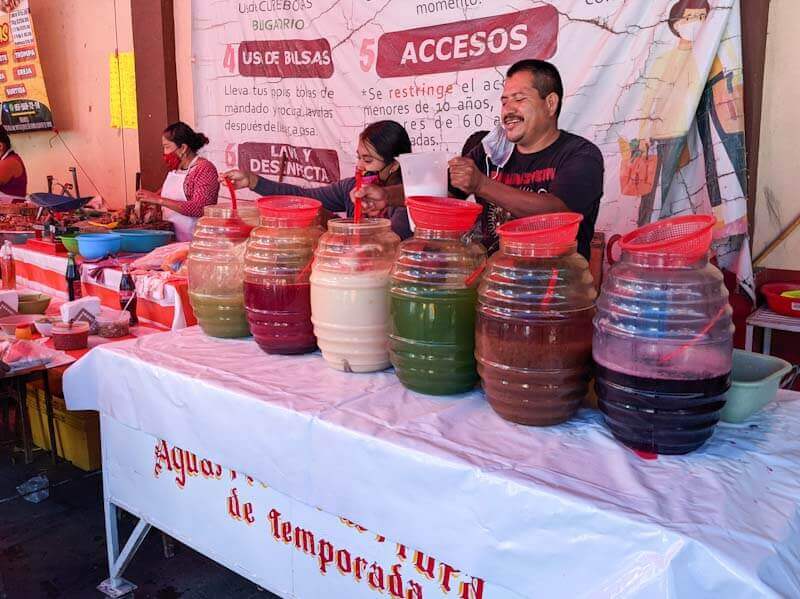
Agua Frescas (flavored freshwater) is a refreshing and popular drink in Mexico made from fresh fruit juices like watermelon to tamarind seed pods.
It is unknown how long the people of Mexico have been drinking Agua Frescas but they think that it has been around as long as tacos. Agua Frescas are not only for cooling you down but are also a part of most meals when dining out.
When you dine at street carts or restaurants, they will ask you “para tomar?” to see what drink you’d like. In fact, when we declined several times, we got some confused looks like a meal without a refreshing beverage was unthinkable.
2. Chilacayote
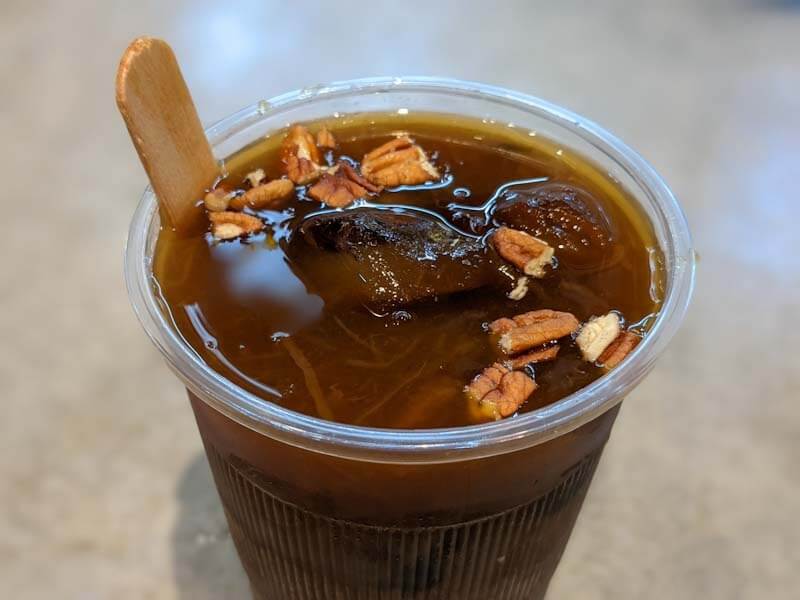
The name of this agua fresca comes from the Náhuatl word tzilacayotli which translates to smooth pumpkin.
This traditional beverage is flavored with piloncillo (raw cane sugar), cinnamon, lemon peel, and pineapple.
The fun part is that the chilacayote gourd is roasted and the strands and pulp are shredded to add to the drink.
3. Horchata con Tuna
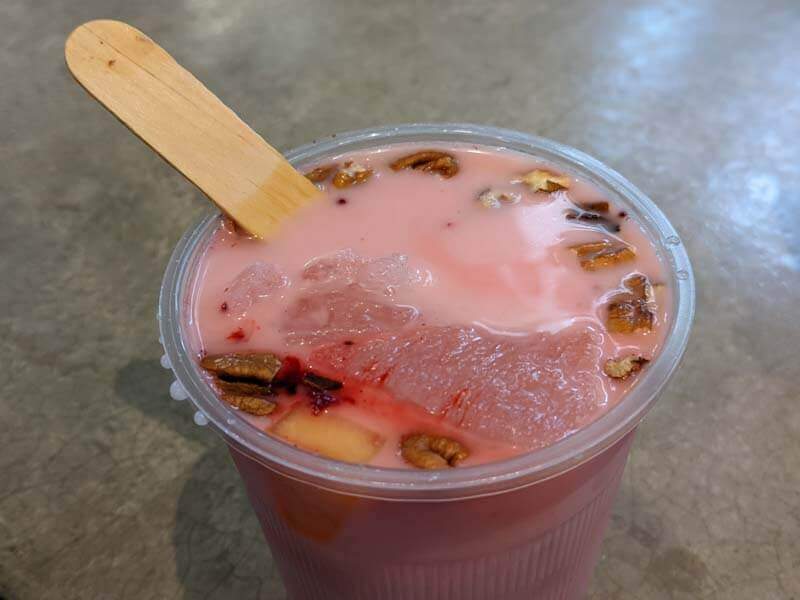
This is not the classic beverage that you get at taquerias and street vendors in other regions of Mexico. This is a fun souped-up version that is so much more than just a chilled cinnamon rice beverage.
The Oaxaqueno version has chunks of cantaloupe that add a sweet melon punch as you eat the pieces between sips. It also gets a nutty addition of roasted pecans that compliments the cinnamon.
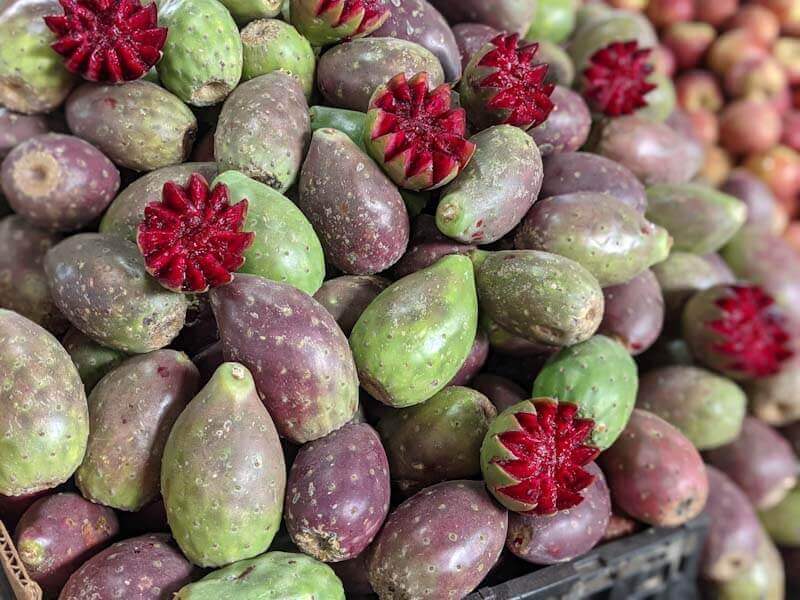
And most importantly they add “tuna” syrup. Not the stuff you get in a can or at a sushi restaurant but the prickly pear that comes from a cactus.
All these fun ingredients are added to toasted rice that has been blended with water. This is a great drink to sip on when visiting the markets in Oaxaca.
Where to try Agua Fresca in Oaxaca: Casilda Aguas Regionales at Mercado Benito Juarez, La Calendula at La Cosecha, Super Jugos Angelita at Mercado Sanchez Pascuas
Traditional Oaxaca Drinks
4. Tejate
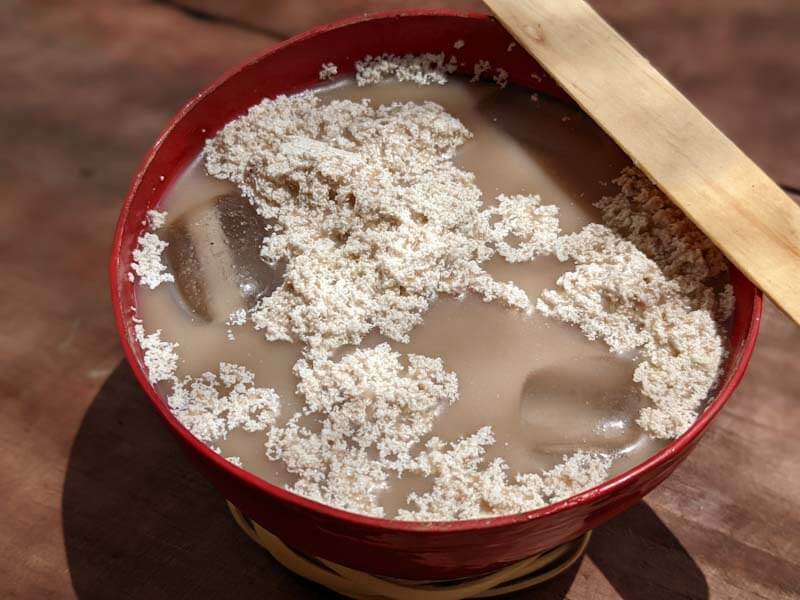
You can’t walk for more than five minutes in any market without coming across a tejate vendor serving up this ancestral beverage in red bowls.
You will only see women hand-stirring up this mixture of corn, roasted cacao, flor de cacao, and mamey seeds. All these are ground into a paste on a metate grinding stone then mixed with water in large ceramic bowls.
This is yet another example of the historical combination of maize and cacao that shows up in so many of the region’s drinks.
What makes this “Drink of the Gods” extra special is how instead of a foam forming on top, it has a layer of granular cocoa fat that melts on your tongue as you sip it.
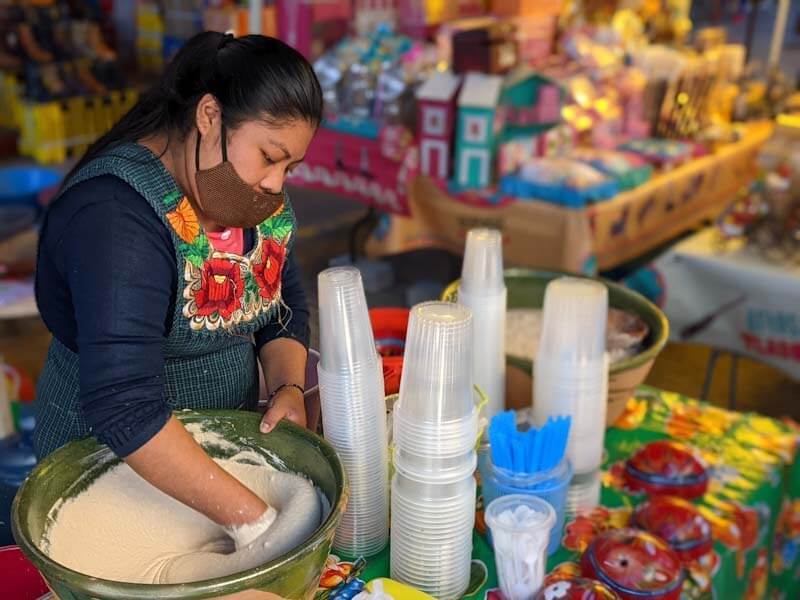
Another thing that sets this semi-sweet drink apart from many of the other ancestral drinks is the almond flavor that you get from the mamey seeds that come from the center of the sapote fruit.
Where to try Tejate in Oaxaca: Flor de Huayapam at Mercado Benito Juarez, Mercado Organico La Cosecha
5. Atole Blanco
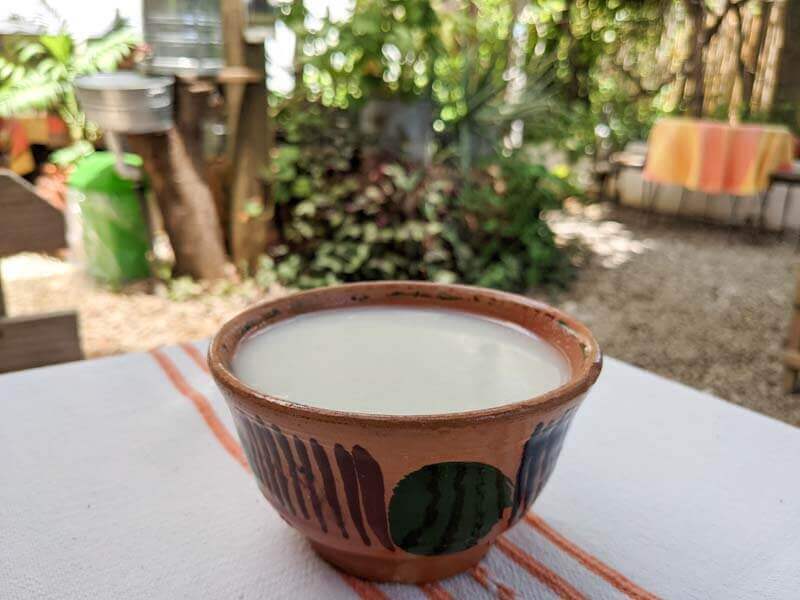
This simple drink is made of just two main ingredients. The first is water and the second is corn that went through the nixtamalization process and was made into masa.
The two are heated up and served in a bowl made out of the fruit of a jićara tree (Calabash tree).
This drink is served all over Mexico with many variations including champurrado which is mixed with chocolate while others are mixed with dried fruits and spices.
The best versions are made with maize criollo which uses only heritage heirloom corn resulting in better and richer corn flavors and aromas.
Where to try Atole Blanco in Oaxaca: Itanoni, Levadura de Olla
6. Chocolateatole
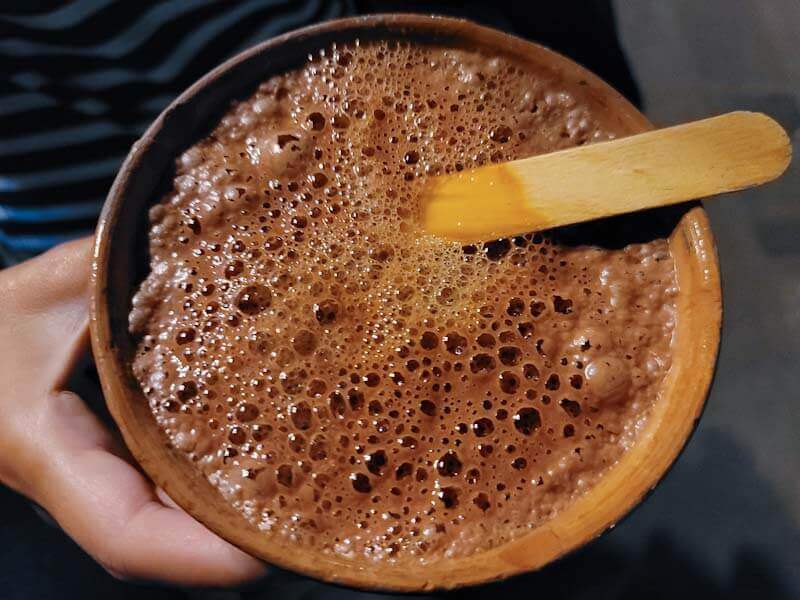
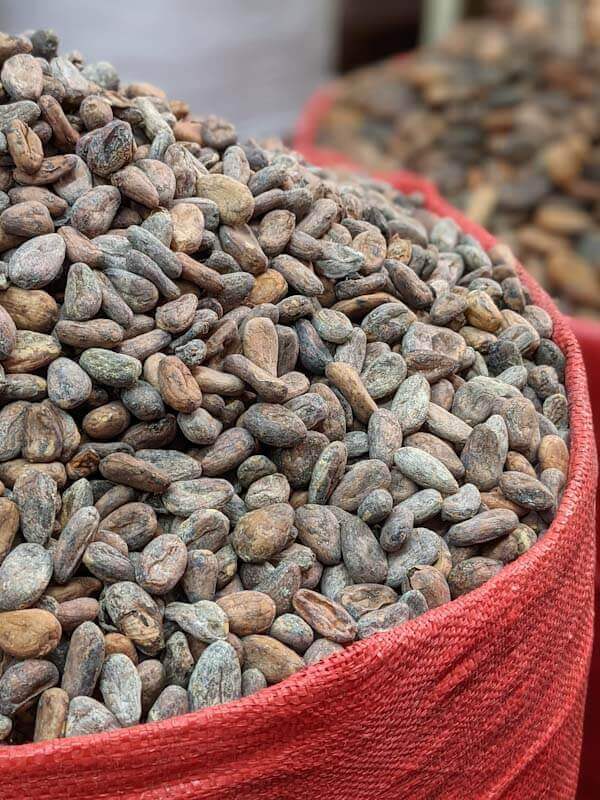
There is much confusion about this maize and cocoa drink as several of the people that we met from Oaxaca thought we were referencing champurrado or atole de chocolate. The big difference is the use of fermented rare theobroma white cocoa beans.
These beans are first fermented for 6 months with limestone. They are then dried followed by a second 6-month fermentation with water.
This process is very time-consuming and this beverage is usually reserved only for special occasions like funerals and weddings.
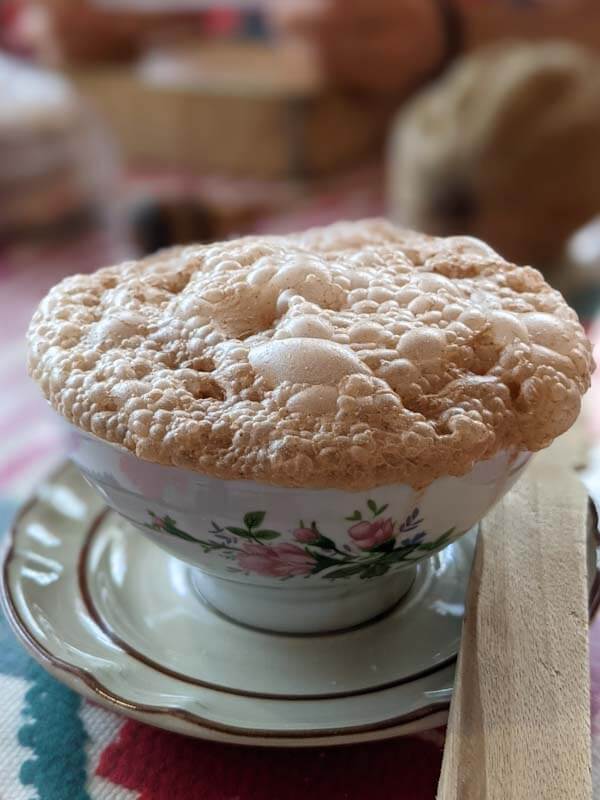
All this effort is for the foam that is not only delicious but also has historical significance to the mythology of the region. This important foam then sits on top of the atole that forms the base of the beverage.
Where to try Chocolate Atole in Oaxaca: Fonda Florecita at Mercado de la Merced, Tlayudas Bustamante y Mina
7. Champurrado (Atole de Chocolate)
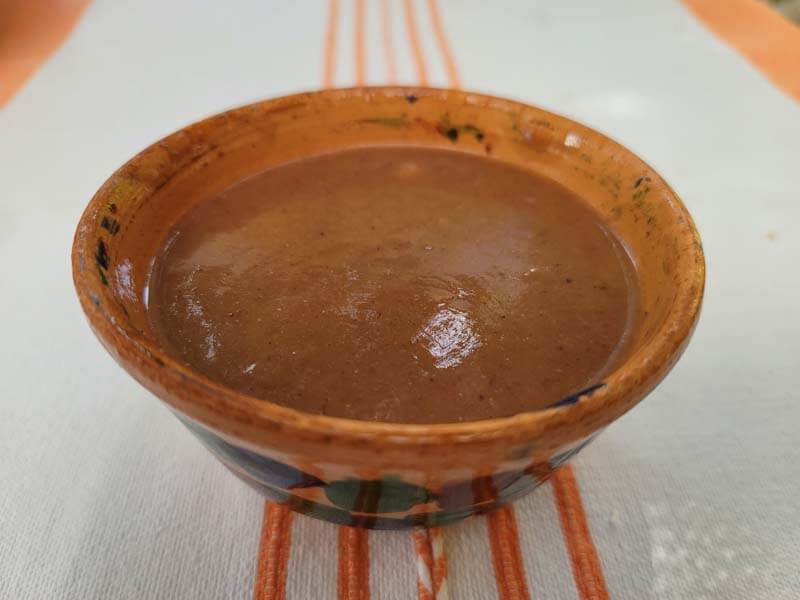
This is a variation of atole blanco where chocolate is added to the base of boiled dried corn. This filling beverage is a meal on its own as it is fairly viscous and is made even richer with the addition of chocolate.
This combination of cacao and maize has a running theme that can be found through many of the beverages. This combo taps into a major part of the mythology that was a major part of the heritage of the region.
Where to try Champurrado in Oaxaca: Itanoni, Mercado Sanchez Pascuas
8. Chocolate con Agua/ con Leche
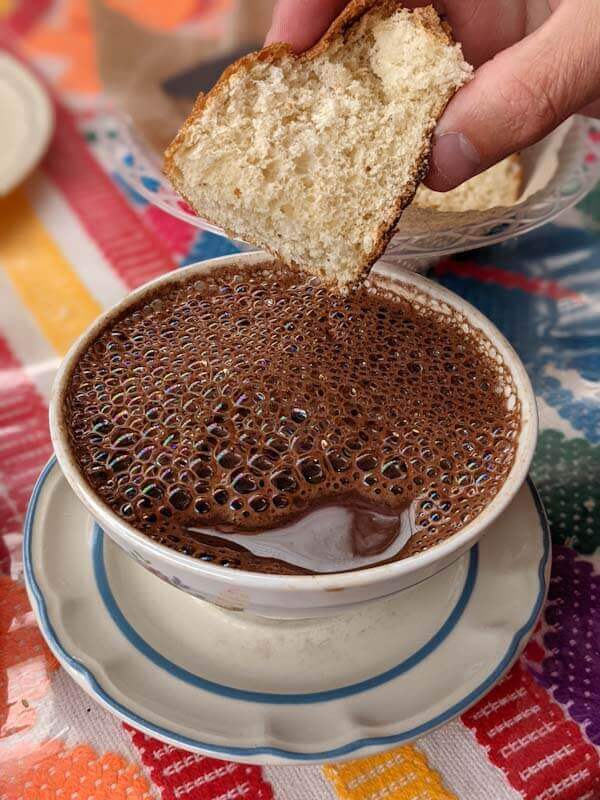
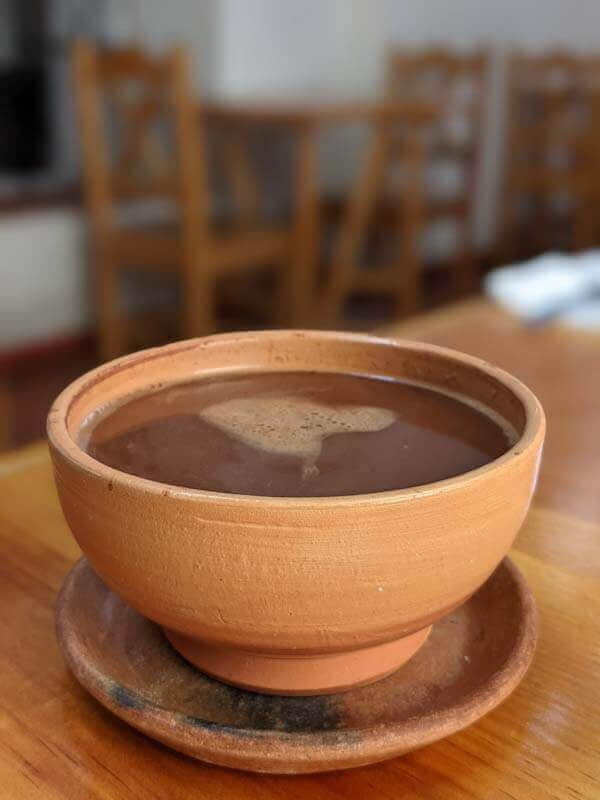
This is simply the best hot chocolate in the world. Some may argue, but it’s hard to beat fresh roasted and ground chocolate that is spiked with cinnamon, roasted almond, and sweetened piloncillo syrup (unrefined pure cane syrup).
This beloved beverage can be ordered with either water or milk as the base with each having its loyal fans.
One side loves the creaminess of the milk version while the other loves the pure unadulterated taste of the chocolate when ordered with water.
Chocolate is almost always ordered with pan de yema (egg yolk bread) that is used to dip in the drink.
Where to try Chocolate con Agua/Leche in Oaxaca: Fonda Florecita at Mercado de la Merced, Oaxaca en una taza, Rito Chocolateria
9. Pozontle

You will not find this beverage in the usual markets and restaurants in and around Centro Oaxaca unless you search hard or get lucky and meet a local connoisseur.
This chocolate and corn-based drink are usually only found in the Sierra Norte region, especially in the small town of Villa Hidalgo Yalalag.
Pozontle is usually reserved for celebrations such as weddings and baptisms. The drink is made with a base of masa made from maize criollo, roasted cacao, boiled cocolmécatl stems (a wild climbing succulent native to central Mexico), and panela (unrefined cane sugar).
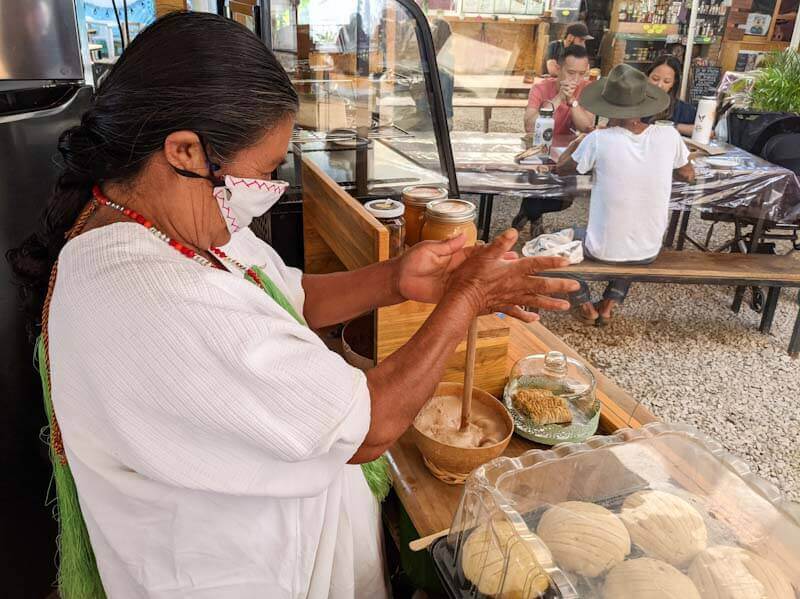
This mixture is formed into balls to store and is mixed with water in a jićara gourd bowl before being frothed up to create a stable foam on top.
If you are lucky enough to be invited to a ceremony or try it out at our recommendation below, take a moment to understand the significance of this beverage that predates Spanish colonialism.
Where to try Pozontle in Oaxaca: La Pozontleria at Mercado Organico La Cosecha
10. Pluma Coffee
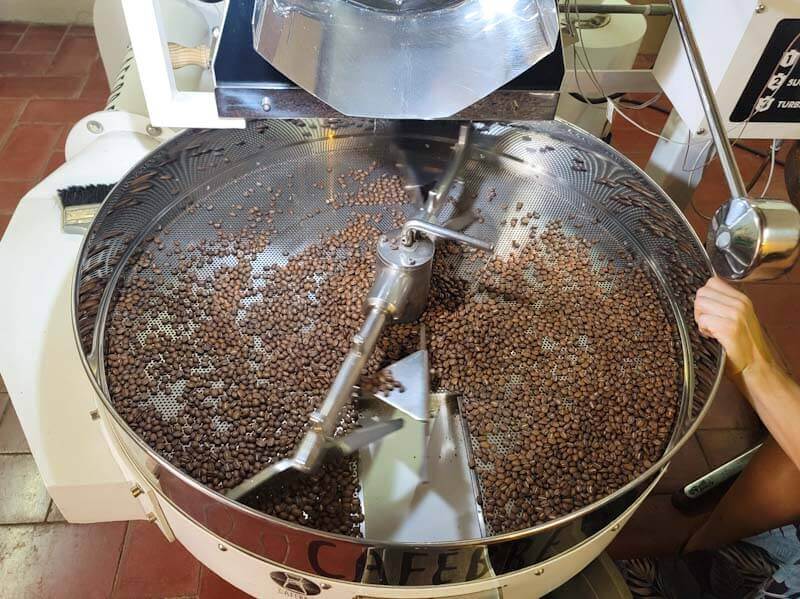
Pluma Hidalgo, a subregion of Oaxaca is the home to one of the best coffees in the world. The Pluma Hidalgo variety is a type of Typica coffee that becomes more nuanced and flavorful the higher the elevation.
The highest prized Pluma coffee is grown over 7000 feet of elevation. This amazing coffee can be found in small boutique coffee shops in and around Oaxaca Centro with much of it being fresh roasted.
Where to Try Pluma Coffee in Oaxaca: Mercado 20 de Noviembre (fresh ground coffee), Cafebre, Cafe Volador
11. Cafe de Olla
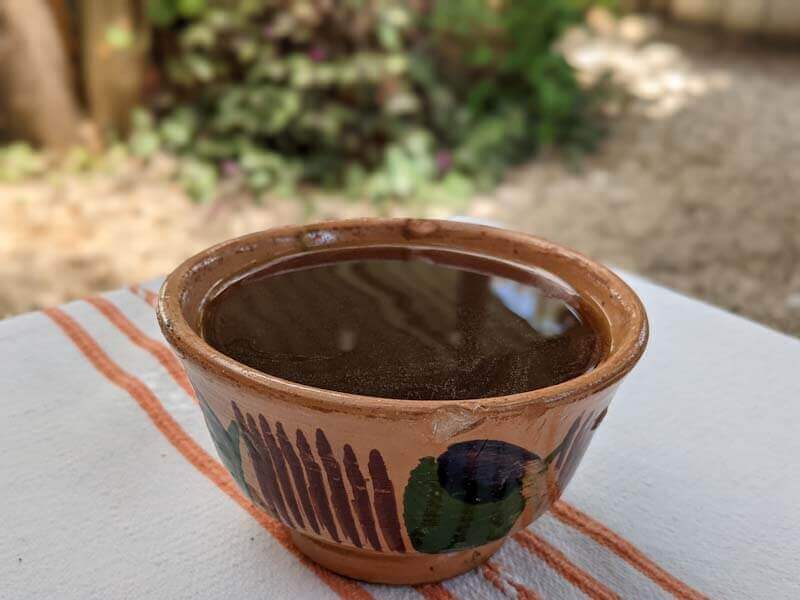
Traditionally, café de olla is ground coffee that is steeped with cinnamon and piloncillo (raw cane sugar) syrup in a clay pot. The key is that it is served in an unglazed earthenware cup that imparts a unique flavor.
Some places may fancy up this fun caffeinated drink with a little orange zest and cloves. This regional coffee specialty is easy to find in almost any restaurant that serves desayuno (breakfast) in and around Oaxaca.
Where to Try Cafe de Olla in Oaxaca: Itanoni, Mercado Organico La Cosecha
Alcoholic Oaxaca Drinks
12. Mezcal
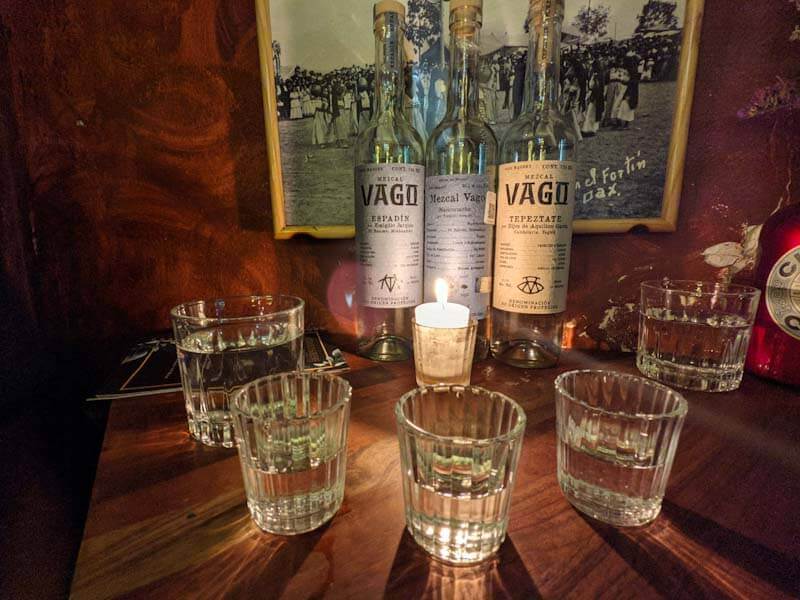
This double-distilled spirit is the product of roasted and fermented agave plants called maguey. The center of all mezcal distillation takes place in the valley of Oaxaca where 75% of the country’s production takes place.
What really makes this spirit special is the fact that the agave plants used to make mezcal can take as long as 15 years when cultivated and 25 years when grown in the wild. On the other hand, most spirits are made with grains that can be reproduced on an annual basis.
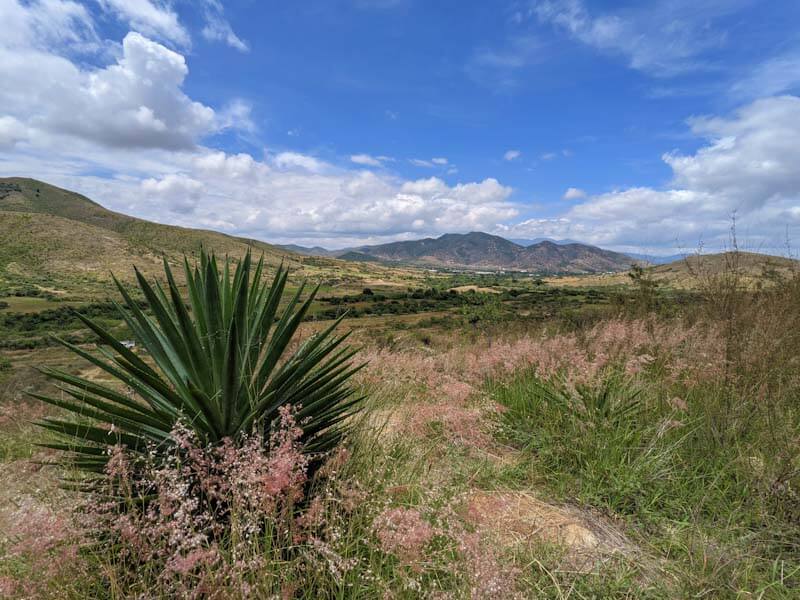
The other part that makes mezcal unique is the commitment to small artisanal production that takes place on small family palenques (mezcal farm and distillery).
A single-family will farm the land, raise the agave, and make the mezcal while doing so in a sustainable and responsible manner for future generations.
In Oaxaca, 18 different varieties of agave are used in making mezcal with each version having its own unique flavors and aromas.
When you visit Oaxaca, make sure to visit a palenque with the assistance of a guide that understands the land, process, and the people that keep the tradition of making mezcal alive.
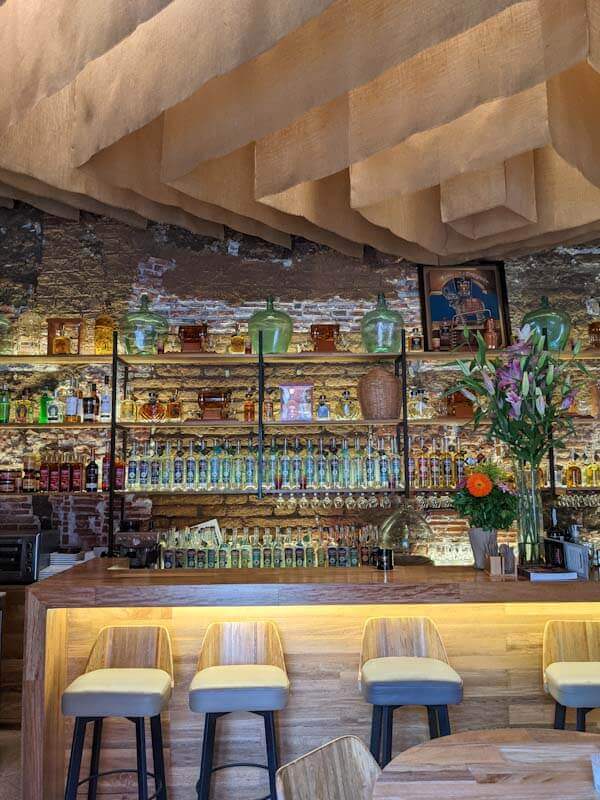
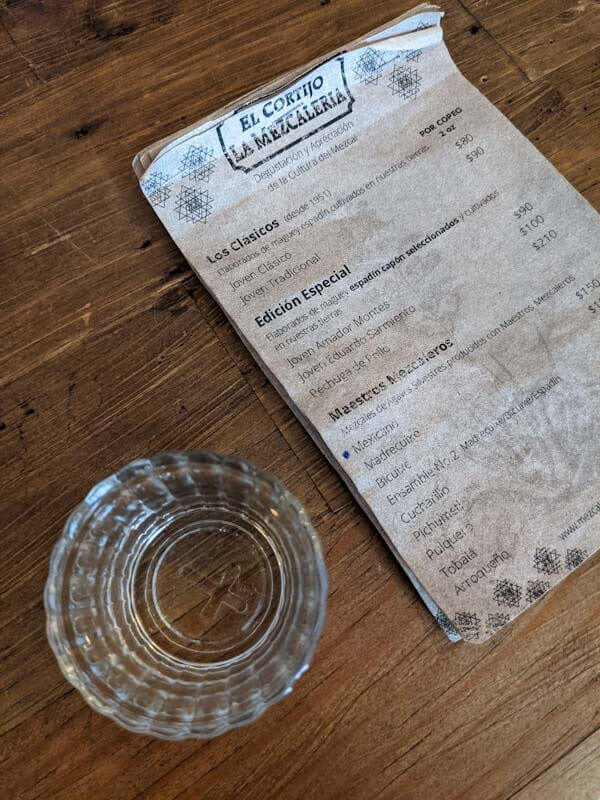
Make sure not to shoot this piece of the heritage of Oaxaca and instead give it “besos” (little kisses) enjoying it sip by sip appreciating the years of hard work and the passion that goes into making artisanal mezcal.
If you’re new to tasting mezcal, our beginner’s guide to mezcal will be helpful to you.
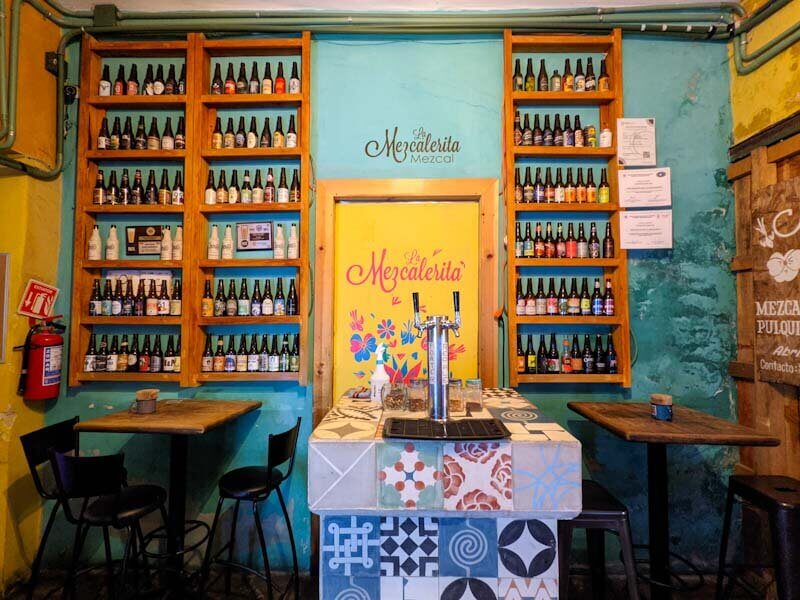
Where to Try Mezcal in Oaxaca: La Mezcalerita, Mezcaleria In Situ

For an immersive mezcal experience, consider visiting a small family palenque through an experienced tour company to get exclusive access.
This tour included learning about how mezcal is made, getting to know the different types of agave plants (both wild and cultivated), tasting the different types of mezcal, and getting to plant your own baby agave.
This was not a drunken mezcal party. It was an opportunity to get to know maestro mezcalero “Conejo” and his family along with the commitment they make to this piece of the culture of artisanal mezcal distilling in Oaxaca.
Guided Tour to Visit a Palenque: Sacred Mezcal Experience with WSE Travel
13. Mezcal Cocktails
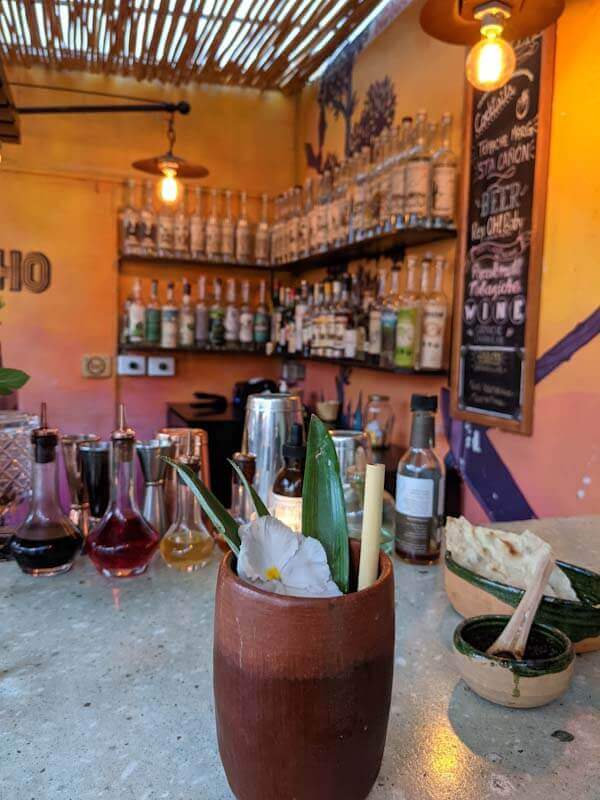
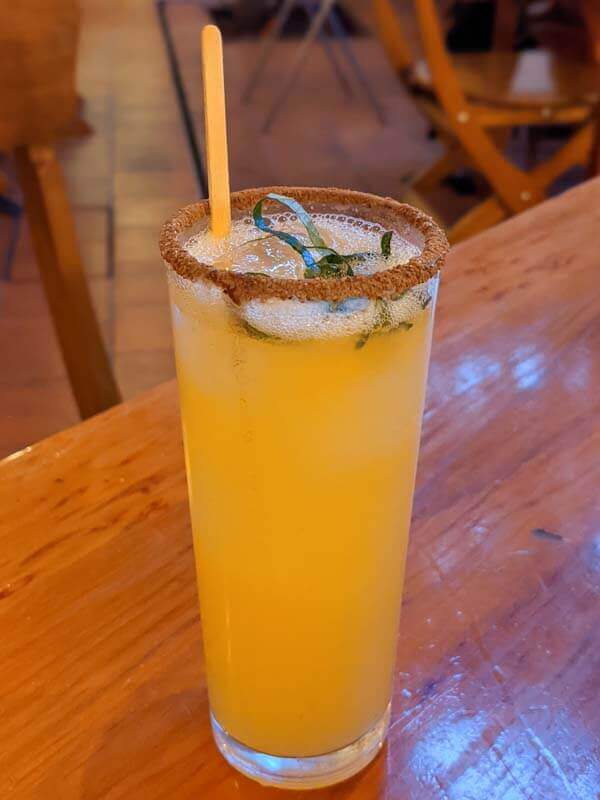
When visiting Oaxaca, do not miss out on the many variations of mezcal cocktails being mixed up by mixologists and bartenders around the city. The natural pairing of tropical fruit, chilis, and mezcal is our favorite no matter what bar we tried it at.
You will find cocktails made with mezcal that are simple variations of the classics like mezcal old-fashioned to a Negroni that uses this agave-based spirit in place of the gin.
You can also find bars making ultra-modern interpretations and new classics featuring this spirit at some of the high-end craft cocktail bars.
Don’t worry about the mezcal purists turning up their nose at you as the artisanal mezcal distiller we met was definitely in favor of mixing up his masterfully made spirits.
Where to Try Mezcal Cocktails in Oaxaca: El Destilado, Sabina Sabe
14. Pulque
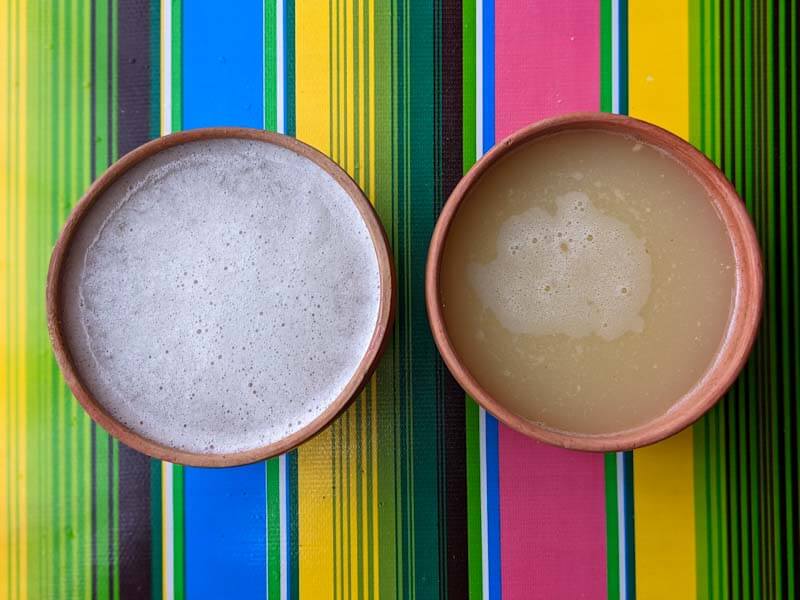
This alcoholic beverage dates back to Mesoamerica and has been a part of the culture ever since.
Pulque is traditionally made with the fermented sap of the maguey (agave) plant with a finished product having a semi-viscous texture and a milky white color. The alcohol content sits around 4 to 6 percent and is often flavored with fruits, spices, and nuts.
These variations are referred to as cured and the original unadulterated version is called natural.
Pulque lost its market share as beer became more popular in Mexico but has been making a comeback and can be found in hip pulquerias serving up many flavors of this beverage that was once reserved for the upper class and clergy.
Where to try Pulque in Oaxaca: La Mezcalerita, Pulqueria Mayaeul
15. Tepache
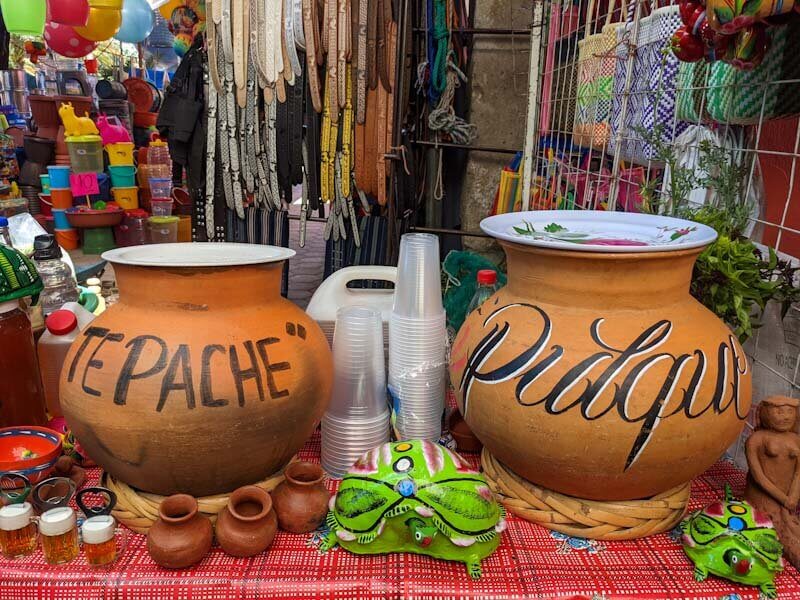
The original versions of this drink started off by fermenting corn but now it is also made by fermenting other fruits, sugar cane, and anything else that might impart a nice flavor.
You can also find versions that are made using fermented pineapple rinds that have a fresh and juicy flavor.
In parts of Oaxaca, you can find versions that still use corn and are flavored with worm salt, chili peppers, and onions.
This beverage is even sometimes spiked with grain alcohol to be used as a hangover cure but for the most part, this is a low alcohol beverage sitting under 1 percent. It can be found being served in clay jars in many of the markets in Oaxaca.
Where to try Tepache in Oaxaca: Mercado Tlacolula, Puro Burro
Mexican Beers To Try in Oaxaca
Beer Producers in Mexico
Mega Breweries in Mexico
Beer production in Mexico is really controlled by two companies that make almost all major brands in the country. You may hate Corona but love Modelo Especial not realizing they are made by the same people.
The good thing is these titans of malt and barley are really good at distribution and are capable of keeping a fresh supply of their beer to all corners of Mexico at very cheap prices.
Craft Breweries in Mexico
Luckily the game is changing and the craft beer scene has made its way south of the border.
You now can find really well-crafted small-batch beers from I.P.A.’s to mezcal flavored stouts all for a little over double the price of the mass-produced beers.
The quality is sometimes hit or miss, but if you get a craft beer from a reputable bar or restaurant, they usually do a good job finding the best options.
Local Beers in Mexico
Cerveza (Mexican Beer)
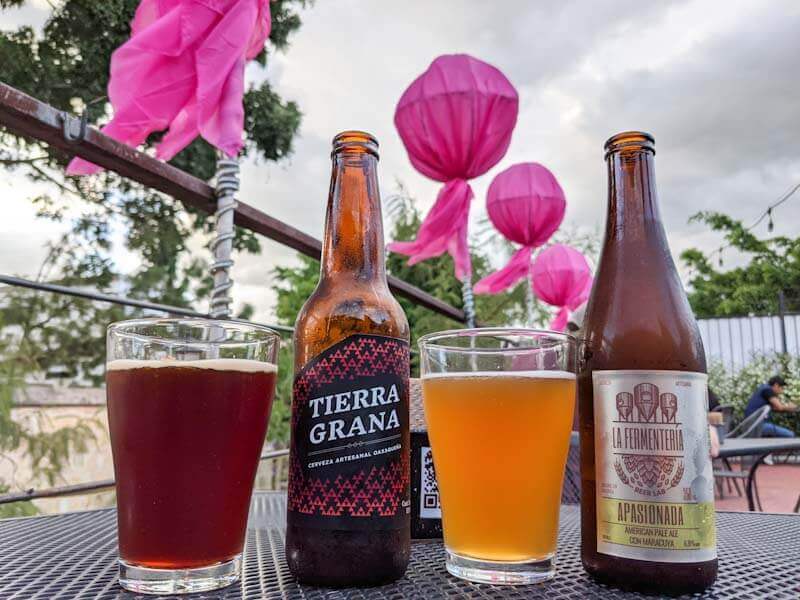
There are four different categories of beer produced in Mexico with each having its own variances. Some of the beers in each group are great while some might make you decide to stick with mezcal cocktails for a night out.
With a little trial and error, you should be able to find the perfect beer for your tastes whether it is a malted dark beer to a crisp lager with a wedge of lime.
Clara
These clear lagers are bright, refreshing, and perfect for a hot day at the beach in Puerto Escondido or at the end of a day hiking the trails of the Sierra Norte Mountains.
- Corona Extra
- Bohemia Pilsner
- Sol
- Modelo Especial
- Dos XX Lager
- Carta Blanca
- Tecate
Obscura
This group is made up of the darkest beers of the bunch and tends to pair the best up against some of the richer dishes like Mole Negro.
- Negra Modelo
- Bohemia Vienna
Amber Beers
A class of beers that have a little more to offer than the clear lagers but is not as assertive as the dark beers. This no man’s land of beers can actually be the perfect balance between refreshing without forgetting that beer is supposed to have flavor.
- Victoria
- Indio
- Dos XX Amber
Light Beers
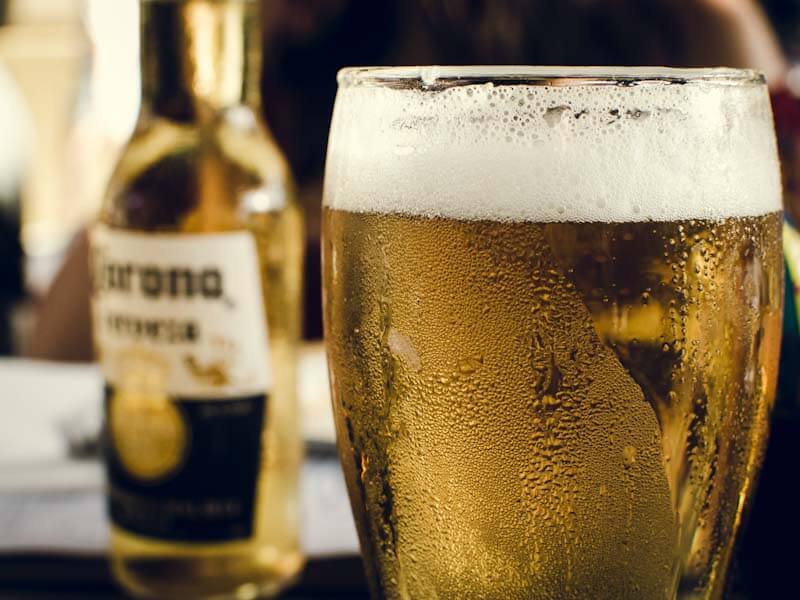
This category is all about compromising flavor in order to save calories. These beers really are just watered-down versions of their sister beers resulting in a lower alcohol percentage.
- Tecate Light
- Corona Light
Michelada
This popular hangover cure is a fun way to take a simple beer and make it an experience. The basic version called the “Chelada” consists of a chili salted glass rim with lime juice.
The full-blown version “Michelada” is the same but with the addition of Worcestershire, soy sauce, Tabasco or other hot sauce, black pepper, and sometimes Maggi seasoning.
This mix is served in the glass and the bottle of beer is on the side that way you can taste it before adding your beer adjusting to your tastes.
For the beer purists out there, I know this may be sacrilegious but you have to try at least one in order to experience this part of the culture of Mexico.
Craft Beers in Oaxaca and Where to Try Them
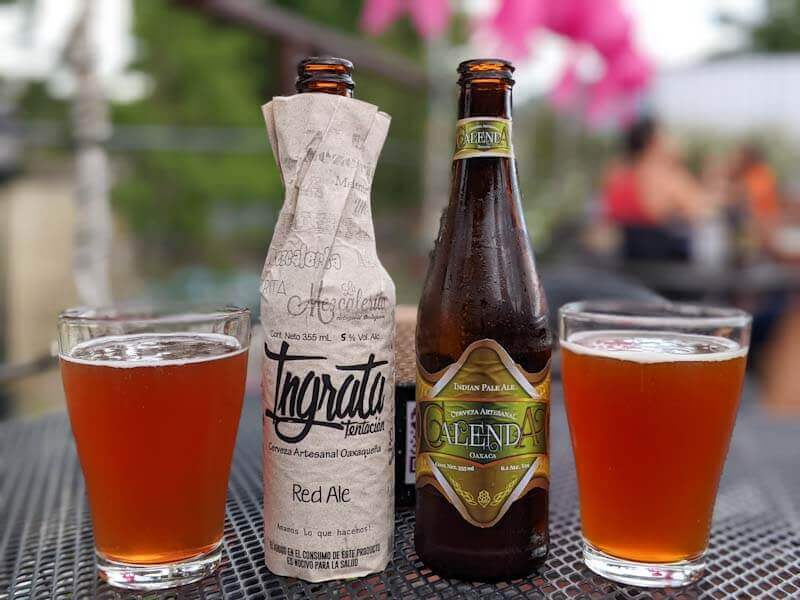
These artisanally crafted beers range as much in style as they do in quality. To be honest, even the lower quality bottles we tried were still better than the mass production beers that dominate the landscape. Give these small producers a try and support the pursuit of better beer.
Breweries With Tap Rooms
- Consejo Cevecero
- La Santisima Flor De Lupulo
- Oaxaca Brewing Company
Other Craft Beer Producers
- Ingrata
- Utopia Microcerveceria
- Cerveza Ammon
- Juquileña
- 8 Regiones
- Valle Central
Cost of Alcohol in Oaxaca (Restaurant and Bar prices)
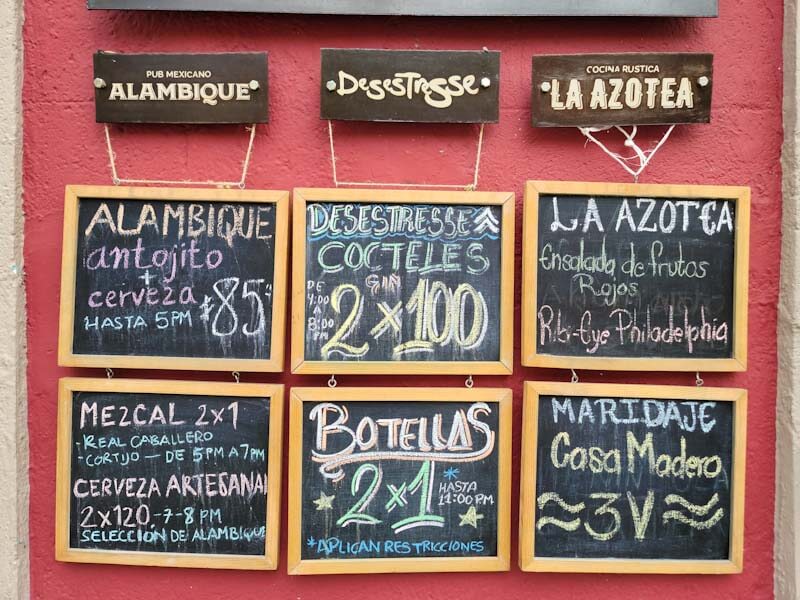
| Corona Bottled Beer | 330ml – 25 to 45 Pesos ($1.22 to $2.20 USD) |
| Bohemia Bottled Beer | 330ml – 30 to 50 Pesos ($1.47 to $2.45 USD) |
| Craft Bottled Beer | 330ml – 70 to 120 Pesos ($3.43 to $5.88 USD) |
| Mezcal (Artisanal) | 2 ounce pour – 45 to 190 Pesos ($2.20 to $9.31 USD) |
| Mezcal Flight | 3 x 2 ounce pours – 230 to 320 Pesos ($11.25 to $15.68 USD) |
| Craft Cocktail | Glass – 100 to 210 Pesos ($4.90 to $10.29 USD) |
| Wine by the Glass | 5 ounce – 40 to 300 Pesos ($1.96 to $14.70 USD) |
Alcohol Rules and Laws Mexico
First off, we are chefs and neither attorneys nor experts on the criminal justice system in Mexico. This is here just to give you some rough guidelines in order for you to have a great time without doing time in a Mexican jail.
Although the alcohol rules are very lenient in Mexico, you can still get yourself in trouble and end up disrespecting the locals.
If you plan on getting blasted maybe contain yourself to the confines of a resort where security is plentiful and they are prepared for drunken debauchery.
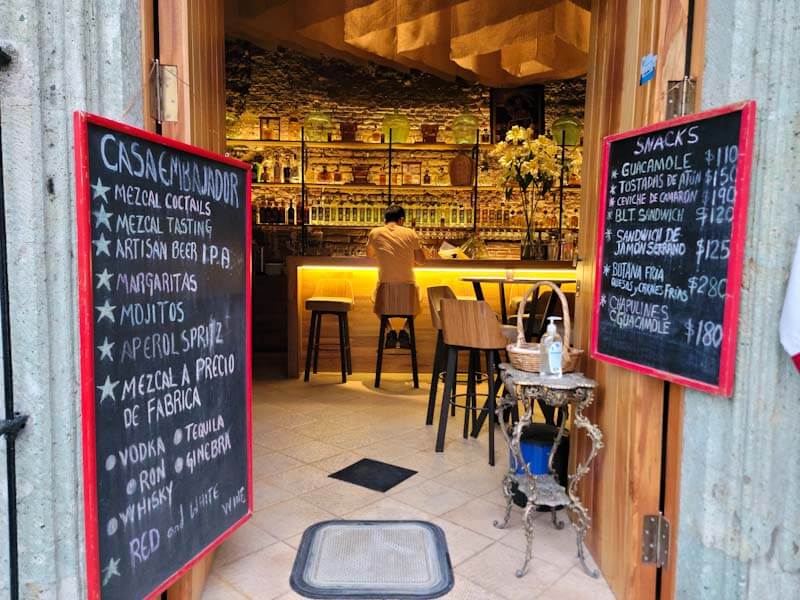
- Drinking Age- The legal drinking age in Mexico is 18 years. This is a few years less than the U.S. and a major reason why so many young people flock to the beaches of Mexico in search of a wild vacation. Even with this lower legal drinking age, the police are trained to look out for underage drinkers and will ask for ID.
- Altitude- With the altitude of places like Mexico City sitting at about 7300 feet, the effects of alcohol will definitely hit you a little harder. What you normally drink in a night of celebrating in moderation can lead to some heavy intoxication.
- Street Drinks- No, drinking on the street in Mexico is not legal. This can lead you to get arrested for public intoxication. It’s never a bad idea to respect local customs and use a little restraint when you know you are going to be out in public after drinking.
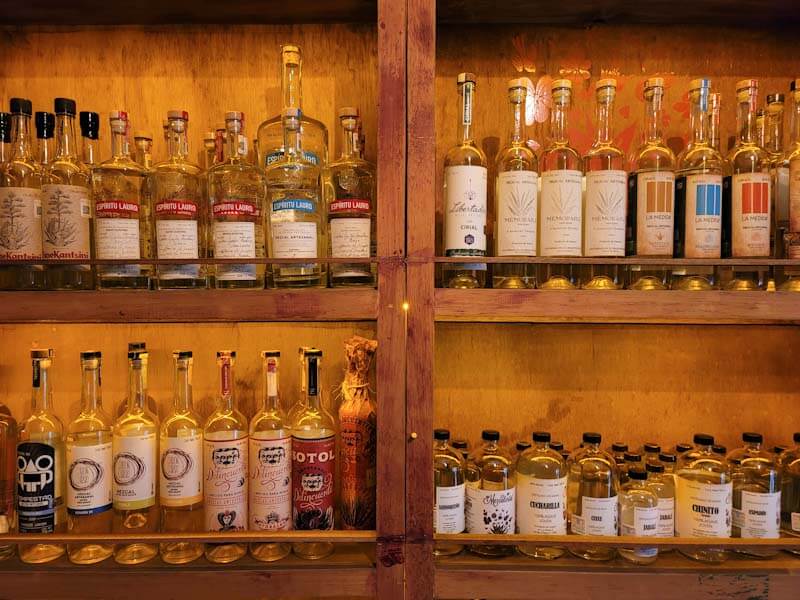
- Elections- Alcohol sales are suspended for 24 to 72 hours depending on the individual state prior to elections. It’s not a complete prohibition as you can still order drinks in restaurants as long as it is during daylight hours.
- Drinking and Driving- The legal limit is .08 and getting caught driving in excess can land you in jail for up to 36 hours. If convicted a second time in 10 years while in Mexico, you can be banned from entering the country. Although it’s not ok to drink and drive, it’s ok to travel with alcohol in a vehicle.
Drinking Safety in Mexico
Although Mexico is a lovely country full of wonderful people, it does have a criminal element and some poverty-driven desperation that leads to petty crime and violence.
This doesn’t mean you shouldn’t visit or avoid leaving your hotel room, but it does mean you need to be aware and take some precautions.
This is frankly not much different than in many major cities in America. Either know where it is safe to cut loose and party or use some restraint.
Although incidents are few and far apart, they do happen. Be smart and hedge your bets on the side of safety first.
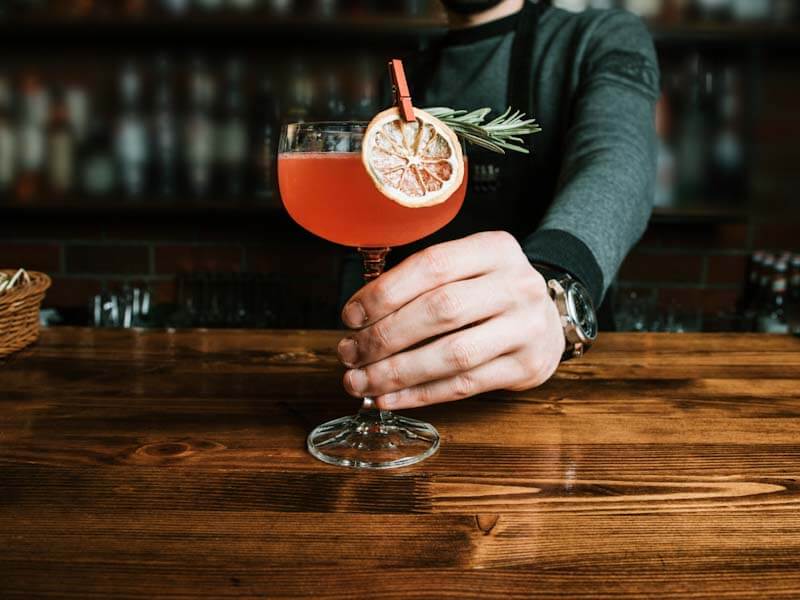
- Public Intoxication- Outside of getting arrested, public drunkenness can draw a lot of attention from people that might want your money or much worse. Drunk people make easy targets especially if they are alone and leaving a bar late at night.
- Common Sense- If you are unfamiliar with your surroundings, maybe skip the empty poorly lit street and take a route that has lots of people and plenty of traffic. Use your brain and make good decisions so that your trip to Mexico is amazing and not a nightmare. If you are really uncomfortable, stick to tourist areas where security is extensive.
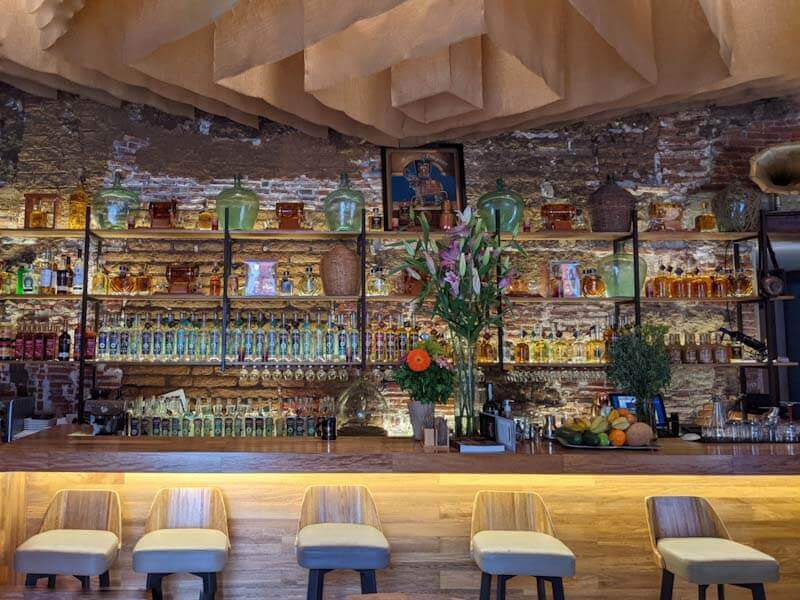
- Strength in Numbers- This applies especially to women as violent acts toward females are a problem in several parts of the country. When going out at night or leaving the bar, make sure you leave in a group or employ the buddy system. Packs of people are not easy targets for scumbags.
- Watch Your Drink- It is generally a good idea to never leave your drink unattended no matter where you are. Someone slipped something into my wife’s drink when at a bar in the Philippines. Luckily we switched drinks and she was safe leaving her to take care of me. This also goes back to staying in a group or having a friend so that you can look out for each other.
Wrap-Up: Oaxacan Drinks
The heritage of some of the drinks produced in Oaxaca date all the way back to Mesoamerica with others lasting many generations. When sipping on a pour of mezcal or a gourd bowl of atole, you are tasting the history of this region and connecting to the people that produce and enjoy these beverages everyday.
Similar to its food, the beverages of Oaxaca are integral to the identity of the culture and heritage of the people. The fundamentals that form the basis of their everyday life in Oaxaca are founded in the early mythology surrounding the creation story of many of these drinks.
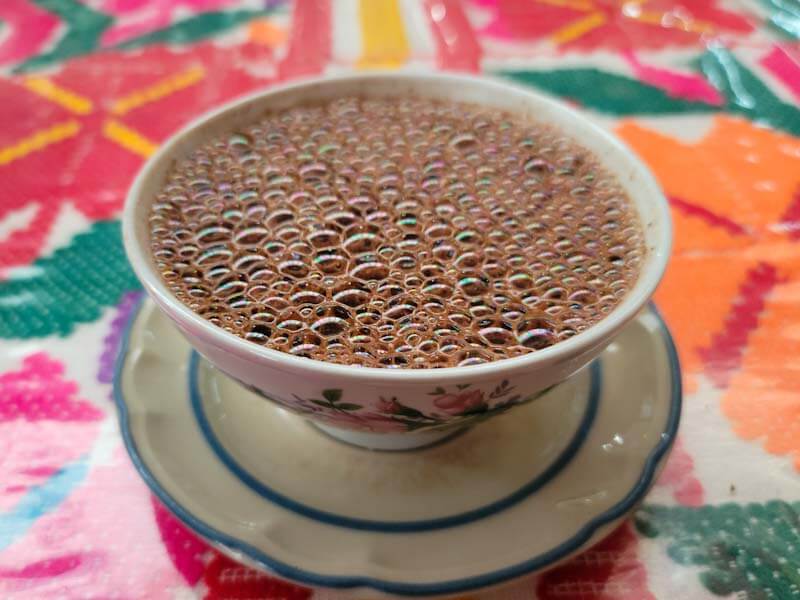
Other beverages have less of a historical significance but are essential in celebrations and everyday life. Whether you get to partake in a bowl of pozontle at a wedding or try local microbrews with newfound traveler friends, celebrate what you are getting to experience.
Just as you will take your pursuit of tasting the best food in Oaxaca seriously, treat the drinks in the same regard. There is a general passion for these beverages and this brings a high expectation for quality.
So sit down to a steamy cup of chocolate con leche for breakfast or visit a palenque to learn about mezcal in order to really get to know more about what makes Oaxaca so special.


![Oaxaca Mezcal Tour: What You Need to Know [2023]](https://cheftravelguide.com/wp-content/uploads/2021/09/best-mezcal-tour-in-oaxaca_-768x432.jpg)

![16 Best Oaxaca Restaurants [2024] – A Chef’s Guide](https://cheftravelguide.com/wp-content/uploads/2022/02/best-restaurants-oaxaca-768x432.jpg)

![41 Different Types of Mexican Tacos [The Ultimate Guide]](https://cheftravelguide.com/wp-content/uploads/2021/12/different-types-mexican-tacos-768x432.jpg)