

Oaxaca Mezcal Tour: What You Need to Know [2023]


Are you looking for the best Oaxaca mezcal tour?
Then this post is for you! When we visited Mexico, one of the most rewarding experiences was getting the opportunity to take a mezcal tour in Oaxaca.
In this article, we will share with you everything you need to know to have the best mezcal experience on your trip.
Frankly, the visit to this family-owned mezcal distillery was a portal into the heritage and way of life of the people of Oaxaca.
Mezcal is so much more than just a beverage in the region, and this Oaxaca mezcal experience takes you right to the heart of this important part of the valley’s history.
📍 Ready to book your Oaxaca Mezcal Tour now?

We went with Where Sidewalks End, and it was the best decision we’ve made. The tour included everything – unlimited mezcal, a knowledgeable tour guide, lunch & snacks, in a private vehicle. ▶ BOOK NOW
What is Mezcal?

Mezcal is simply a distilled spirit made from agave plants that are grown in 9 different states in Mexico.
On the other hand, what makes mezcal complex is how the agave is grown, the way it is produced, the culture that surrounds this spirit, and the rich nuance of its flavors and aromas.
Is mezcal a tequila? The simple answer is tequila is a type of mezcal, but mezcal is only sometimes a type of tequila.
This may sound confusing but what makes mezcal special is how and where it’s produced and the agave it is distilled from.
Choosing the Perfect Oaxaca Mezcal Tour

There are literally dozens of mezcal tours in Oaxaca that vary greatly in what they offer. Some are large group tours of the commercial distilleries with their shiny fermentation tanks.
And there are others that are more of a booze cruise on a tour bus shaped like a mezcal bottle.
BEST OAXACA MEZCAL TOUR
For us, we wanted more of an experience than a tour. We chose to book the Oaxaca Sacred Mezcal Experience with a company called Where Sidewalks End, which is focused on small group tours that visit a family-owned and operated palenque. ▶ BOOK NOW
This appealed to us as we not only got the chance to learn about how mezcal is made, but we got to meet the family along with the opportunity to spend the day with the mezcalero himself.
When making the decision on what mezcal distillery tour to take, make sure to choose one that fits what you want to get out of your time in Oaxaca and creates the memories that you want to hold onto long after your trip is over.
Visiting an Artisanal Mezcal Distillery in Oaxaca

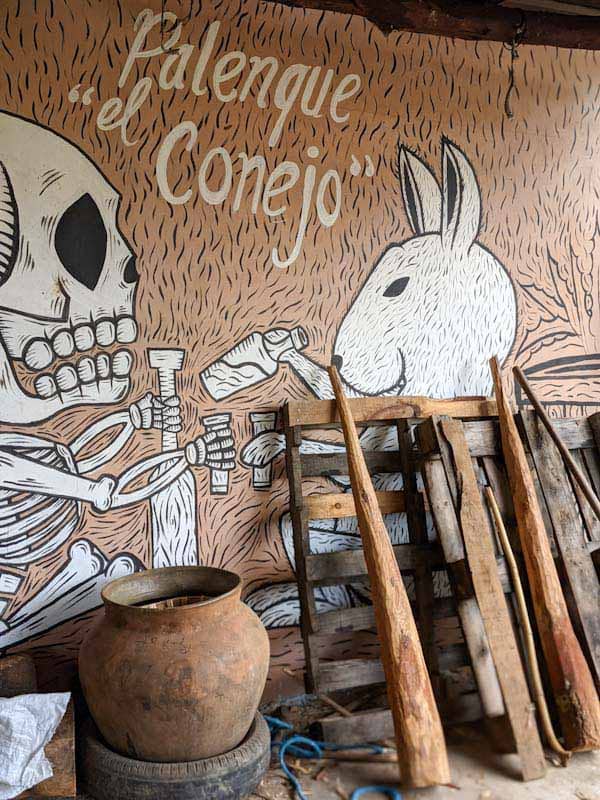
The most impactful part of visiting this boutique mezcal producer is the sense of wonderment that hit us when we first arrived at Palenque el Conejo.
The drive out to Santa Catarina Minas in the valley outside of Oaxaca city gave us just enough time to build up some additional anticipation and a little extra knowledge provided by our guide.
We stepped out of the car and we instantly knew that we were in for something special.
This was more of a small family home in the country that showed very little evidence of any type of commercialized distilling.
There were farm animals and little children playing instead of a fancy parking area and little signs pointing to the tasting room that you would find at one of the large producers.

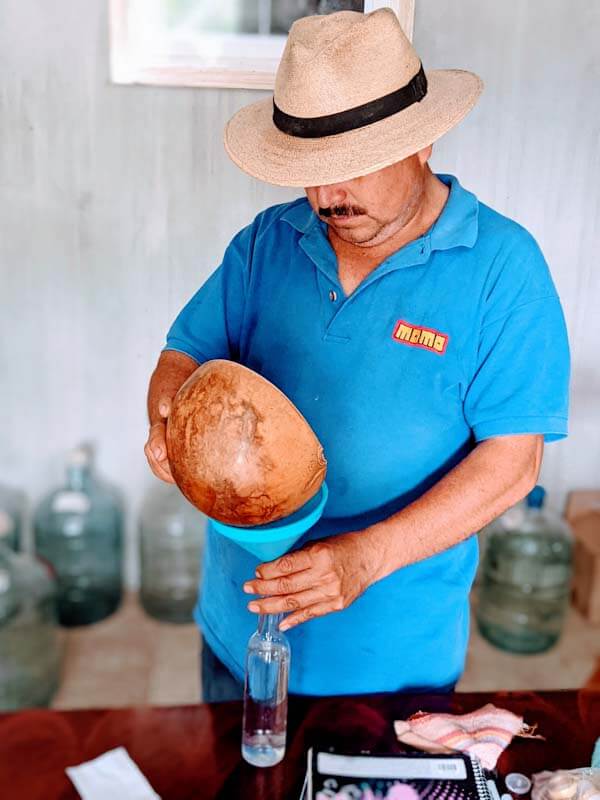
We were immediately greeted by a glowing gentleman holding a bottle of mezcal who emitted a warm sense of hospitality and sincere excitement to meet the small group.
This joyful person was Maestro Mezcalero El Conejo which translates to master mezcal distiller “the rabbit” who is the head of the family and the third generation of mezcal producers at this farm.
This Oaxaca mezcal tour was as much about getting to see and experience the way of life of this family and its farm as it was about learning about mezcal.
The family, the farm, and the mezcal were all intertwined in a symbiotic relationship with each part playing its own significant role.
Wandering Among the Wild Agaves

To get to know mezcal, you must first start with the plant that it is made from. These giant succulent-like plants are called agave or as the locals call it “maguey”.
Worldwide, there are over 200 varieties of this plant and in Oaxaca, they use 18 different types in the making of Mezcal.
At Palenque El Conejo, they raise and use 15 types of maguey that either grows wild in the hills or are transplanted and cultivated.
Some of our favorites were Tepeztate, Barril, Tobasiche, and Cuish, but each variety has its own special qualities that uniquely affect the flavor and aromas of the mezcal.
The best part was getting to hike up and around the hills hunting for wild maguey plants as El Conejo would identify them and describe the unique nuances of each variety.
Each type has different shapes and sizes that make them fun to identify.
Learning about all of these unique and different types of maguey plants may seem like a lot to take in, but it comes in handy when it comes time to pick out a type of mezcal.
A Sustainable Ecosystem at this Oaxaca Mezcal Distillery

Another important part of the mezcal educational experience was seeing how the wild agaves are moved to the milpas (cornfields) for them to mature.
The agave plants are highly affected by their environment and will only produce quality mezcal if they are equally nourished and nurtured.
In order to make sure that the agave is well hydrated, they are transplanted in rows on the edge of each terrace of the field as they scale downhill.
Water from rain and the nearby man-made lakes then trickles down from the top tiers to the bottom, nourishing the crops and the agave plants as it goes.
This tiered system allows for a little water to go a long way with little waste.

One of the parts that intrigued us the most was how they grew corn and beans in the field to provide nutrients back into the soil for the agave to thrive.
The corn and beans were then eaten by the family to provide them with the necessary nourishment and energy to meet the high demands of taking care of a farm.
The leftover corn is then used to feed the farm animals in this small sustainable ecosystem.
The leftover fibers from distillation along with all the extra plant matter, as well as used up coals were composted and mixed into the soil.
This entire process is not just about making amazing mezcal, but rather forward-thinking about future generations and caring for their legacy.
What makes this Oaxaca Mezcal Tour special? You get to plant your own agave!

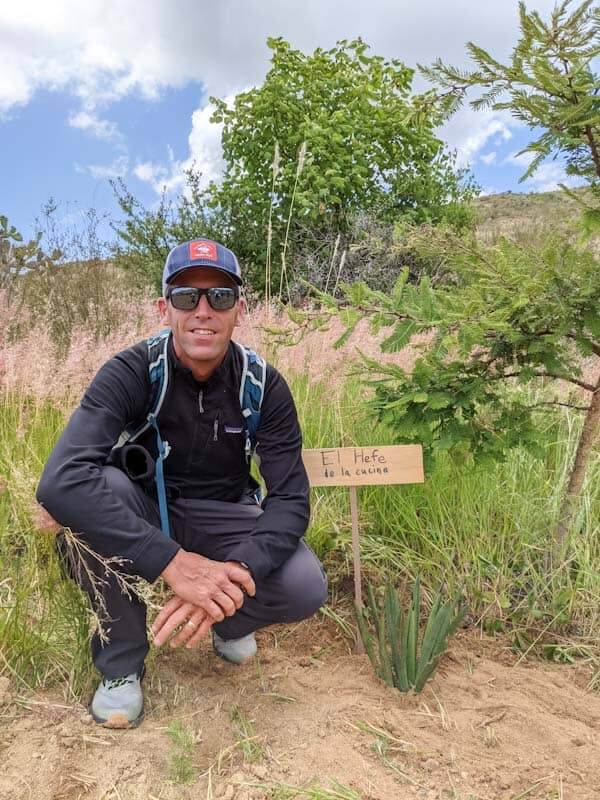
Not only do you get to experience a working farm, learn how mezcal is made by a master mezcal distiller, taste a bunch of mezcal, but the most amazing part was getting to plant your own baby agave.
You get to pick out your favorite variety and transplant it into the cornfield. The next step is to give it a name and write it on a sign so you can come back and visit your grown-up maguey.
If you are lucky and you time it just right, you might get a chance to buy a bottle from the same batch that used your maguey during the distilling process.
How is Mezcal Made?

3 Types of Mezcal Distilleries (Palenques)
The methods, equipment, and traditions vary tremendously depending on the type of producer.
This is a big part of the reason that we chose to go with Where Sidewalks End as they only work with Palenque El Conejo, which is a small artisanal producer.
Industrial / Commercial
Mass-produced mezcal using large mechanical grinders, juice diffusers, and autoclaves instead of earthen ovens and use stainless steel tubs for distilling.
The use of modern technology allows the spirit to be only single distilled.
Artisanal
This group makes up most of the certified mezcal that is produced. This is small-batch mezcal produced using traditional techniques and equipment.
They cook the piñas in underground ovens, distill in clay or copper pots, and grind the piñas using anything from a mallet to a horse-drawn grinder.
Ancestral
The process is almost the same as artisanal with the exception of the grinding process of the piña and the pots used to distill.
The tools and methods used to grind must be powered exclusively by humans.
No electricity, gas, or horse-driven power is allowed. The pots used for distilling must be clay or wood with direct flame.
The best mezcal is only made using artisanal and ancestral production techniques and is the only real option if you want to experience the best that the region has to offer.
Process of Making Mezcal

There may be easier ways to make a spirit, but these techniques are a big part of the reason why mezcal is so special.
The mezcaleros that spend the time and make this spirit the traditional way are beloved and those that cut corners are frowned upon.
NOTE: You will experience a specific part of the mezcal production process depending on which day you go on your mezcal tour.
Harvesting
This is the back-breaking part of the job. First, the leaves have to be trimmed off, followed by digging up and transporting the massive piñas (core or body of the plant).
The big varietals can weigh up to 200 to 300 pounds
Roasting the Agave
Inside of a large earthen pit, a fire is built. It is then layered with river rock that creates a layer between the piñas and the fire.
The pit is covered with burlap and dirt, trapping in the heat that roasts the piñas for up to 5 days.

Mezcal Fermentation
The piñas are dug out of the fiery pit and placed on racks for 15 days where they cool and start to collect the natural yeasts that are in the air.
After this time, the piñas are pulverized and the bagazo (pulp and fibers) along with the juice are added to large open top vats with some water where it will ferment for another 15 days.
Mezcal Distillation Process
The fermented liquid is added along with some of the fibers to a clay still that is heated with a wood fire.
The liquid heats up and turns to steam that is directed into a tube at the top where it condenses back into a liquid. This process is repeated a second time to concentrate the mezcal to around 50% alcohol.
Mezcal Tasting

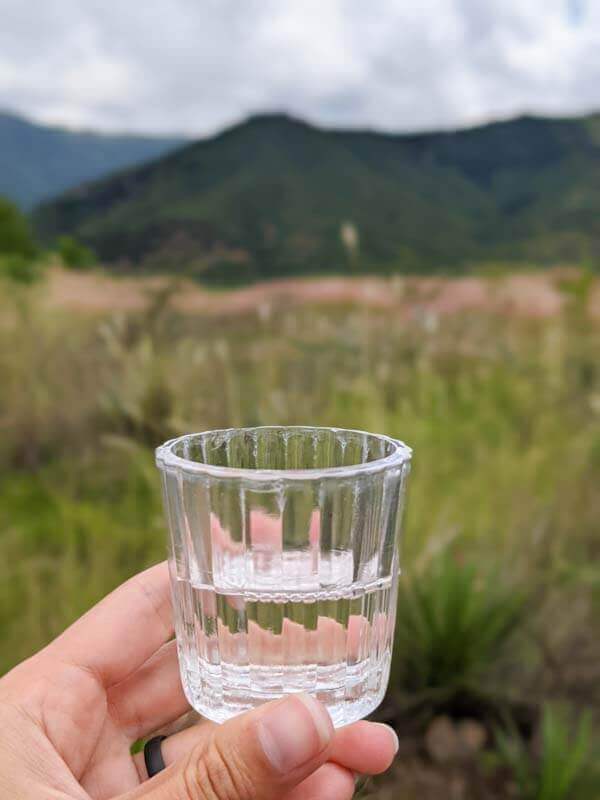
From the time you arrive, till the time you head back to the city, there will be mezcal to taste.
Mezcal is meant to be cherished, so sipping is the name of the game, and taking shots is never appropriate. This allows for mezcal to get consumed all day without getting hammered.
They will greet you at the farm with a taste, and they even open a couple of bottles at lunch to help with digestion, but the real tasting takes place at the end.
El Conejo invites you inside to where he stores his large bottles of mezcal where he allows you to try any varieties that you would like.
There are usually around 15 or so varieties that they have available at the moment.
We would highly recommend buying a bottle or two to take back to your accommodation or to share with some friends.
Oaxaca Mezcal Tour

It’s a given that when visiting Oaxaca that you are going to want to try some mole, or make a trip out to visit Monte Alban.
But to be honest, our favorite of the food and adventures we had was getting to partake in a mezcal tour in Oaxaca.
As travelers, we are all seeking experiences that touch a place and its culture.
We feel the best way to do that is by visiting a palenque and getting to see firsthand how the best mezcal distillery in Oaxaca makes this amazing spirit.
Now it’s your turn to book this once-in-a-lifetime trip to meet a maestro mezcalero and his family at his farm in the beautiful Santa Catarina Minas valley.
Mezcal Tour Oaxaca Overview
What to expect:
- Cost: $135/person for 2 people, the price goes down with the group size
- Start time: 8 am
- Duration: up to 10 hours (all-day tour)
- Transportation: Hotel pick-up and drop-off
- Group Size: max of 6 people
What’s Included: English-speaking guide, snacks on the field, a shared meal at the end of the tour, unlimited mezcal tasting, private vehicle
This Oaxaca Mezcal Tour is FOR YOU if: You are interested in learning about mezcal in a more immersive experience
This Oaxaca Mezcal Tour is NOT FOR YOU if: You are more interested in catching a solid buzz than learning about the nuances of mezcal and its history, you will want to choose another tour. If you cannot hike in the hills or be on your feet for several hours, you might want to make other plans.

Quick Mezcal 101: Frequently Asked Questions
Is Mezcal only from Oaxaca?
Mezcal is produced in 9 states in Mexico, but Oaxaca accounts for 70% of its production.
Where can I try Mezcal in Oaxaca?
Mezcal can be purchased by the glass in restaurants, mezcal tasting rooms, and on tours of mezcal distilleries.
Where is Mezcal made in Oaxaca?
Mezcal is produced at places called palenques that only distill mezcal. Some are family-owned farms, and others can be massive commercial distilleries.
How do you drink Mezcal?
Mezcal is served in a small glass called a veladora from which it is meant to be sipped. These small tastes are called a “beso” which means to kiss. It is considered disrespectful to shoot mezcal as it is meant to be savored.
What does Mezcal taste like?
Each type of mezcal produced by each distillery has its own unique flavors and aromas. Some of the common flavors that are referenced are smoky, herbaceous, mineral, salty, vegetal, and tropical fruits like pineapple.


![Best Foods in Mexico – Top Mexican Dishes to Try [2023]](https://cheftravelguide.com/wp-content/uploads/2021/12/mexico-food-tacos-1-768x432.jpg)


