

Visiting Yosemite in March [Ultimate Guide]

KEY TAKEAWAYS
- Yosemite in March is a great time to visit if you want to avoid the crowds and not mind the cooler temperatures.
- Weather in March is unpredictable and can vary from sunny skies to winter storms.
- Expect daily temperatures of 58°F (high) and 33°F (low), with an average of 9 days of rain/snow.
- We love visiting in March for the lack of crowds, cheaper accommodations, and seeing the Valley blanketed in snow.
Are you thinking about visiting Yosemite in March?
While the rest of the country welcomes the spring and its seasonal blooms, there is a chance that Yosemite is still blanketed with snow.
This is a great time to explore the last leg of the winter months and enjoy many activities that make Yosemite one of California’s top destinations.
Weather is very unpredictable in Yosemite in March, but this guide will help you make a decision about whether you should visit at this time of the year.

Visiting Yosemite in March

At a moderately high elevation of 4,000 feet, Yosemite Valley gets its fair share of snow during the winter months.
Yes, March is still considered part of winter in the park, and the weather can vary significantly from sunny skies to winter storms.
Sections of the park, including the upper elevations, will be closed, but plenty will remain open, including the valley floor and its many attractions.
March is considered the off-season, meaning the crowds will be minimal and you will find parts of the park relatively empty.
The smaller crowds have the added advantage that reservations are easy to come by for accommodations, and prices are at their lowest of the year.
Despite how beautiful and scenic the whole place gets, winter is the off-season, so it will feel like you have the place to yourself.
Getting Around Yosemite
A free shuttle services multiple routes in the park.
During the winter, a shuttle runs from several locations in the valley to Badger Pass Ski Area, where skiers can access trails for cross-country skiing, downhill skiing, and snowboarding.
Shuttle services are very limited during this season, making driving more convenient, as there are plenty of parking spaces and less traffic.
Pros of Visiting Yosemite National Park in March

You will avoid the crowds
Yosemite in March is stunningly beautiful, and the park doesn’t get as many visitors as it does during the summer.
Out of the millions that come through the park each year, only about 5% visit during this particular month.
Most of the winter crowd comes from December to January, so if you’re visiting during March, you will avoid the large peak and off-season crowd.
Easier to book accommodations
Booking accommodations inside and outside the park is a struggle during the busy season, with most hotels booking up at least six months in advance.
This leads to people making reservations at hotels way outside the park, which requires a long drive and terrible lines to get through the entrance kiosks.
During March, you can easily book any of the amazing historic hotels in the park or one of the resorts or cabins right by the Yosemite park gates.
This convenience allows spur-of-the-moment trips and takes the pressure off planning.
Great deals on accommodations
With a surplus of rooms during the month of March and low demand, you will be able to score an incredible place to stay for super-low prices.
Many hotels and vacation rentals in the area can go for as little as half the price of their normal summer rates.
Imagine having the option to book a room with a hot tub for less than you would have to pay for a standard room during the high season.

Experience Yosemite blanketed in snow
A visit to Yosemite in March will offer stunning views of the park’s landscapes that will be capped with a winter’s worth of snow pack.
The Granite monoliths will be topped with a blanket of snow, and the trees in the valley are often frosted with a fresh layer of powder.
If you are lucky and arrive right after a late winter storm, you may be treated to a fresh sheet of snow across the whole valley, transforming the park into a winter wonderland.
This time of year is a photographer’s dream, with the snow-capped peaks reflecting in the still water in the valley rivers and streams.
Plenty of snow activities
Yosemite is still a snowy wonderland during the winter months, which means that there are many ways to play in the snow.
The neighboring Badger Pass Ski Area offers up excellent skiing that is easily accessible, as there is a shuttle that picks up and drops off at several locations on the valley floor.
Another popular option is ice skating at Curry Village, where you can take in the views of Half Dome while sprinting across the ice.
Goat Meadows Trail and Snow Area is a great option for sledding, tubing, and snowshoeing on the trails.
There are places to rent equipment nearby but come early as they often run out.
You can also visit Crane Flat Campground Road, which has some great hills for sledding and a few tracks for cross-country skiing.
Snow conditions vary greatly by year, and there is a thicker snowpack at the start of the month than at the end, so adjust your plans accordingly.
Wildlife Sightings
Yosemite is relatively quiet during the winter, which means that there is an increased probability of seeing wildlife roaming around the park.
You can spot snowshoe hares, coyotes, mule deer, and red foxes roaming the park.
You might even get lucky and see one of the elusive big horn sheep or a mountain lion.
Black bears are generally still hibernating in March, but in the lower elevations, which includes the valley, they sometimes skip their yearly slumber.
Cons of Visiting Yosemite National Park in March

Chilly temperatures
As it’s still considered winter in Yosemite in March, the weather is still going to be on the colder side.
As it’s not as cold as January or February, the average daily low temperature still sits at a near freezing 34 degrees.
The weather can also be extra cold and wet if a storm rolls through.
Breezes blowing through the valley across the snow in the upper portions of the park can make it feel even colder.
Do not fret about these low temperatures as it does warm up to an average of 57°F for the daytime high temperature, and there are usually plenty of sunny days.
Unpredictable Weather
No matter how much you plan, the weather in Yosemite can be very unpredictable.
The weather report may say that the conditions will be clear, but there are snow storms that pop-up out of nowhere.
It’s not all snow in March, as there is also a good chance of rain showers and the occasional thunderstorm.
You may have planned a lovely day out in the snow, only to have the sky open and dump buckets of rain. It happens, and you just need to be prepared.
Make sure to have cold weather clothing, a good rain jacket, and carry chains for your car.
You can see what to wear to Yosemite in March here.
Limited access to some parts of the park
Traveling to Yosemite in March means you’re still deep in the snowy season, and though it’s the end of the winter, many roads remain closed.
The Tioga Road and Glacier Point Road usually close for the season starting in October or November and stay shut until May or June.
This means that many of the park’s attractions, like Glacier Point and Tuolumne Meadows, will be inaccessible, while others can be visited on snowshoes.
Almost all the roads that traverse the higher elevations in the park will be closed for the season, including Tioga Road.
This means you cannot enter from the east over the Tioga Pass.

Limited access to Mariposa Grove
A visit to see the majestic Giant Sequoias should be on the list for everyone planning to visit Yosemite National Park.
The only problem is that the road to the Mariposa Grove closes in October or November and stays closed until April.
You can still visit these giant redwoods in Yosemite, but you will have to either hike the 2 miles, which includes 500 feet of elevation gain, or use some snowshoes if there’s fresh snow.
There is also the option to visit the less crowded Tuolumne Grove, which is only 1.25 miles in each direction with a 500-foot climb on the way back.
The trail will likely be snowy and icy, so be prepared and have some snowshoes or traction devices.
Tire chains are most likely required
Yosemite is in a mountainous area where the roads are commonly covered in ice and snow during the winter, which extends through March.
When visiting Yosemite, it is required by law to carry snow chains, cables, or tire socks, even if the roads are clear, as the weather can change in a moment.
This also applies to four-wheel drive vehicles with snow tires and rental cars, which seldom come with chains.
Purchase chains or one of the other traction devices in advance and practice installing them before arriving in the park.
Read about driving in Yosemite in November in this section.
Camping and Backpacking are limited
If you are hardcore enough to want to sleep outdoors in the cold in March, a limited number of options are available.
Backpacking is best left to experts with experience and training in snow camping, using snowshoes, and navigating in the snow.
Conditions can be treacherous on the trails leading out of Yosemite Valley, Wawona, and Hetch Hetchy.
Four campsites in Yosemite are open year-round, allowing you to set up your tent and try your best to stay warm.
Yosemite Weather in March

- Yosemite Valley Floor at 4000 ft
- Temperature: average high 57 °F, average low 34 °F
- Rain/Snow: 9 days and 5.5 inches of rain
- Tuolomne Meadows at 8600 ft
- Temperature: average high 42 °F, average low 15 °F
- Rain/Snow: 9 days and 4.2 inches of rain
The weather in Yosemite Valley in March is a mixed bag with some rainy and snowy days.
The nights and mornings will be near or at freezing temperatures, but the days are generally comfortable if you are bundled up in a good jacket.
During March, the Yosemite Valley floor experiences an average of 9 days of rain or snow, estimated to be around 5.5 inches.
The average daily low temperature sits at 34°F while the daytime high averages at 57°F.
As the weather in Yosemite in March is unpredictable, sometimes it’s warm during the day, or other times it will be wet and cold.
However, the temperatures are always freezing at night, so be prepared with the proper gear.
Be flexible with your plans in case the sky opens up and dumps buckets of rain.
If you plan to visit in March, make sure to plan for all winter conditions with lots of layers and a good waterproof jacket.
Yosemite in Late March
The weather in Yosemite in late March will not be drastically different than earlier in the month.
It is still very unpredictable, so you can expect rain, snow, or lots of sunshine.
Snowshoeing will be too late at this time of the month as there might not be enough snow at this time of the month.
Make sure to read these practical tips for visiting Yosemite either in early March or late March.
Driving to Yosemite in March

When driving to Yosemite during the off-season, one of the most noticeable differences you will observe is the lack of waiting at the entrance.
During warmer months, particularly the summer peak season, visitors arriving at the entrance will wait an average of one hour before finally getting inside the park.
When planning your trip, consider that the roads may be icy or covered with snow which will require chains and some extra time to get to the park.
The Tioga Pass is closed for the winter, so some travelers from Southern California will have to take a different route.
Hwy 140 remains open all year round, but some sections may be subject to snow chain restrictions, so make sure to be aware and prepare for a longer trip.
- TIRE CHAINS
Tire chains are required safety equipment when traveling through snowy mountainous regions in California.
Chains are used to minimize accidents that happen due to loss of traction when a vehicle is driving on a snowy or icy road.
Yosemite is located at a moderately high elevation, so the roads can be very treacherous, especially right after a snowstorm or when the wet roads freeze over.
You can purchase some before leaving for Yosemite or buy them at nearby towns, but the selection will be limited, and the prices will be much higher.
🚗 If you need to rent an all-wheel drive, you can find the best deals on car rentals at RentalCars.com
- ROAD CLOSURES
Several roads in or leading to the park close for safety reasons during the winter months, with a few staying closed until the start of summer.
Tioga Road and Glacier Point Road are closed for the season from around October or November, and they usually remain closed until May or June.
Road closures updates are periodically posted on the National Park Service’s website to keep the public updated.
Check the website before starting your trip and during your visit to Yosemite to stay updated on the current closures and road conditions.
Hiking in Yosemite in March

Hiking in Yosemite in March will require a little extra planning, and you will need to carry some additional gear that is not necessary during the warmer summer months.
Many of the park’s trails will be closed or covered in snow, especially in the upper elevations in the park.
If you want to hit the open trails in the park, make sure to dress in layers and carry all the essential gear like a map, GPS device, compass, and a waterproof jacket.
The conditions can change quickly, and the trail markers can be covered in snow.
It’s also imperative that you wear shoes with good traction, and carrying additional traction devices is a good idea as there can be lots of ice.
If the trails are covered in snow, it’s a good idea to bring or rent snowshoes that will provide traction and keep you from sinking in.
You can see our recommended packing list here.
Yosemite Valley Floor
The hiking trails at the Valley Floor remain accessible year-round despite snow conditions in the park.
These trails are generally on the easier side with limited vertical climb, but they may be a little more challenging if there is ice or snow.
Lower Yosemite Falls, Cook’s Meadow, and Mirror Lake Loop are some of the most accessible day hikes in this part of the park.
You can also take the John Muir Trail that leads to the Vernal Falls Footbridge for a bit more of a challenge with some great views.
Also, refer to the list below for other hiking options.
- Bridalveil Falls – 0.5 mi out & back, 80 ft elevation gain
- Lower Yosemite Falls – 1 mi loop, 50 ft elevation gain
- Vernal Falls Footbridge – 1.6 mi out & back, 400 ft elevation gain
- Mirror Lake – an easy 2-mile hike for the lake & back and 5 miles for the full loop with 100 ft elevation gain (to the lake) or 200 feet elevation gain (loop)
- Cook’s Meadow – 1 mi loop, flat
- Valley Loop Trail – an easy to moderate 6.5-mile hike for the half-loop and 13 miles for the entire loop that is mostly flat.
Hetch Hetchy

Hetch Hetchy offers year-round hiking as the elevation is only 3900 feet which means that it still gets snow, but it usually doesn’t stay for long.
The trails offer scenic views of the water and the surrounding granite cliffs, which can be a bit of a change of scenery compared to the forested trails in the park.
The narrow and winding road to the trailhead is only open during daylight hours, 8 AM to 5 PM, so make sure to access it only during these times.
- Lookout Point – 2.7 mi out & back, 541 ft elevation gain
- Wapama Falls – 4.6 mi out & back, 954 elevation gain
- Rancheria Falls – 13.4 miles out & back, 2,618 ft elevation gain
Mariposa Grove
The majestic Mariposa Grove is located just one hour from the visitor’s center in clear conditions.
This is one of the top destinations in Yosemite, which draws in large crowds to see over 500 Giant Sequoias in the grove.
You will have to drive to the Mariposa Grove welcome center to reach the trees and then hike the two miles to see the Sequoias.
The path can be a little treacherous after a storm and may require snowshoes.
If you make the trek, you will be rewarded with a chance to experience the Grizzly Giant and the other Sequoias without the crowds.
Once in the grove, you can take the trails and go cross-country skiing or snowshoeing.
- Grizzly Giant Loop Trail – 2 mi loop, 383 ft elevation gain
- Guardians Loop Trail – 1.5 mi loop, 200 ft elevation gain
Backpacking in Yosemite in March
Backpacking in Yosemite in March is not for beginners and should only be attempted by trained experts with strong knowledge of wilderness survival and experience snow camping.
If you have the training and are open to backpacking in the cold, Yosemite in March offers an epic opportunity to hit the trails while they are covered in snow.
You will have large portions of the park all to yourself, as the trails will be inaccessible to most visitors.
Some good trailheads at lower elevations exist for less adventurous backpackers, including Yosemite Valley, Hetch Hetchy, and Wawona.
The National Park Service has included some guidelines on their website that you can read here.
📍 Plan ahead, have all necessary winter camping equipment with you, make sure to have snowshoes on, and most importantly, inform other people about your entire backpacking itinerary.
Things to do in Yosemite in March

Go for a hike
If you want something more to do than spending a day of skiing at Badger Pass or ice skating at Curry Village, then you should go for a hike.
The valley floor in March is generally free of snow and ready for a fun day of exploring.
You can enjoy the views from the snow-covered granite walls or test your skills as a nature photographer.
This is also a perfect way to get the blood flowing and warm up while enjoying the park’s scenery.
Take a Guided Bus Tour (Valley Floor Tour)
For those who want to stay nice and warm, you can take a guided tour of Yosemite’s Valley Floor from the comfort of a heated bus with panoramic windows.
This two-hour tour is led by park rangers and naturalists who will show you some of the Valley’s main attractions and teach you more about the park’s history and ecology.
During winter, tours are only done twice daily at 10 AM and 2 PM.
See the Giant Sequoias in Mariposa Grove
The Mariposa Grove is home to over 500 Giant Sequoia that will be surrounded by snow in March.
This is the best time of year to visit as the crowds are at a minimum, and the contrast in color of the bark of the tree against the white snow is stunning.
The only downside is that no shuttles run to the grove, and the road is closed for driving because of the winter conditions.
You will have to hike the two miles to reach the world’s largest trees.

Take in the Tunnel View without the crowds
Tunnel view lookout point offers one of the best vantage points in the park.
This viewpoint offers a unique perspective where you see a lengthwise view of the valley with its granite walls flanking both sides.
Because the view is stunning, the parking and viewing area get packed during the summer months.
In March, you may even get the place to yourself and an opportunity to see the valley blanketed with snow.
Stop by the Yosemite Museum & Ansel Adams Gallery
Take a moment to check out the Yosemite Museum and Ansel Adams Gallery.
You will learn more about the park’s history and view several art pieces made by American Indian artists.
The museum has an Indigenous American cultural exhibit that gives you a better understanding of the importance of the park and its preservation.
There is also the Ansel Adams Gallery showcases the legendary photographers’ work, including incredible landscape photos of Yosemite. See the gallery’s calendar.
You can also check out Yosemite Falls, Half Dome, and Glacier Point, which are all visible from the gallery.
See the Yosemite Valley Chapel
The Yosemite Valley Chapel has been offering church services for over 135 years.
This quaint little church sits in the heart of the valley and is surrounded by gigantic granite cliffs, and its front doors look out on Yosemite Falls.
The Yosemite Valley Chapel is super photogenic and popular for weddings.
Soak in the views from the Sentinel Bridge
The Sentinel Bridge spans the Merced River in the center of Cook’s Meadow and offers up-close views of some of the park’s biggest attractions.
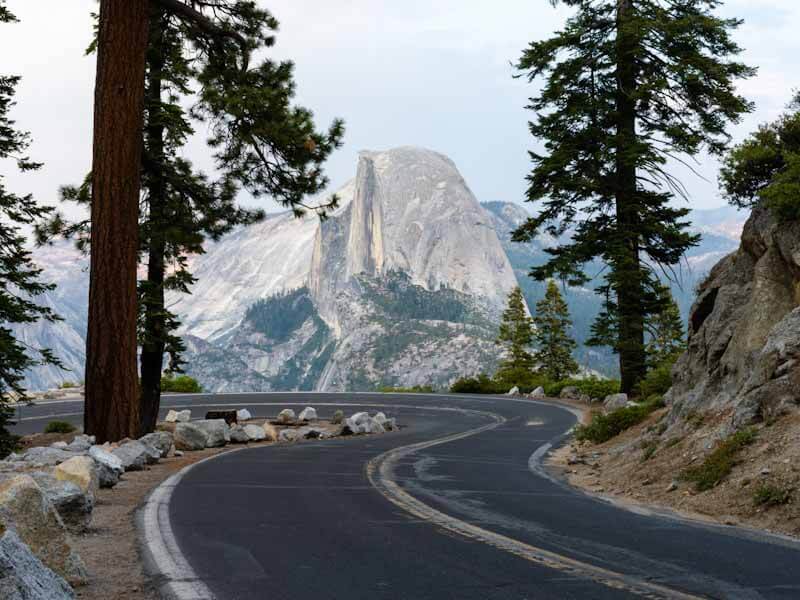
What makes this particular bridge stand out is that you can see the reflection of Half Dome in the water under the bridge when it’s still.
Many visitors have stopped for this photo, but few get a shot with snow covering Half Dome.

Visit Hetch Hetchy
The glacier carved Hetch Hetchy valley is a giant lake formed by the Tuolumne River’s damming.
The area is stunning and very different from the tree-covered Yosemite Valley.
It also has granite monoliths that jet out of the reservoir’s water.
This is a great area for hiking in March because of its lower elevation, which receives less snow and is a little warmer on most days.
Go ice skating at the Curry Village
Curry Village ice skating rink is a park staple that has welcomed visitors to Yosemite since 1899.
The placement of the rink is perfect and offers an amazing view of Half Dome right from the ice.
You can see the sites and make turns at the same time.
During the week, there are three time slots per day, and on weekends, they offer four 2.5-hour slots to choose from.
Take a soak in a hot tub
If you spent the whole day out in the cold, exploring the great outdoors, wouldn’t it be nice to warm up in a hot tub at your hotel?
A few select hotels and resorts in the area offer hot tubs where you can relax your muscles after a day of hiking in the park.
The best part is these reasonably priced hotels are easy to reserve and are at their cheapest of the year in March.
Guided Tours in Yosemite in March

Yosemite Full-Day Tour from San Francisco (Small Group)
- Trip Duration: Full Day (14-15 hours)
- Pick-up Locations: Hilton Union Square Hotel and Dublin BART station
If you are planning on visiting Yosemite from San Francisco, then this small group full-day tour is the perfect option for those that don’t want to drive.
This small group tour allows no more than 13 people per van, which is great if you are not a fan of large group tours.
The tour picks up in Union Square and makes its way across the Bay Bridge before heading through the heart of gold rush country before arriving at the park.
You will spend the day seeing all the top sites, including El Capitan, Half Dome, and Tunnel View.
📍 READ MORE: We have put together a comprehensive post on the best ways to get to Yosemite from San Francisco without a car. If you’re going on a road trip to Yosemite from SF, read this. If you’re coming from Sacramento, read this post.
Yosemite Guided Bus Tours
- Tour Duration: 2 hours
Take a tour of the valley floor with this bus ride led by a Yosemite Park Ranger that is an expert on flora and fauna in the valley.
You will get to take in all of the top attractions in the valley through the bus’s panoramic windows while learning about the park’s history.
The bus is also heated, which makes this a warm and toasty way to see the park on a cold March day.
This bus tour in Yosemite operates year-round. Click here for more information.
Self-Guided Audio Tour
Instead of taking a traditional tour, do it yourself with this audio guide that adapts to your timing and pace.
This self-guided audio tour allows you to take a tour in the order you want to see the sites while choosing your route.
You will have your own tour guide on your cellphone that will travel with you through the park.
GPS prompts the tour’s audio recordings to play automatically when you reach points of interest.
You can listen to stories about Yosemite’s history and learn about the plants and animals in the park. The best part is that this audio tour is very affordable.
How many days do you need in Yosemite?
Although a large portion of the park is closed during March, there is still enough to do to keep you entertained for a full two days.
If you want to take your time and have breaks to warm up in your room or the hot tub, then 3 to 4 days is the best option.
Yosemite is beautiful when the granite walls are covered, and you won’t want to leave, especially if there is a fresh dusting of snow on the trees.
Where to Stay in Yosemite in March
There is a huge range of options for accommodation that are both inside the park and out.
You will have to decide if you want to pay a little extra to stay in the Yosemite Valley or stay in a full amenities hotel or resort outside the park entrances.
The best part is that you won’t have to book in advance, and the prices will be at the cheapest of the year.
This means that you should spring for that special room that offers stunning views of the valley right from your room.
Inside the Park

Yosemite Valley Lodge
Yosemite Valley Lodge is in the ideal location right in the middle of the valley, where you can enjoy views of the granite peaks from your hotel balcony.
The surrounding facilities offer everything from casual to upscale dining, and there is even a cocktail lounge with pub bites.
Check Rates & Read Reviews: Yosemite Valley Lodge
The Ahwahnee
This iconic Yosemite hotel offers views of some of the park’s most majestic attractions, including Half Dome and Yosemite Falls.
They offer the best accommodations and the nicest restaurant in the park that come along with the highest price for a room in the valley.
Curry Village
With a combination of simple rustic rooms to canvas tent cabins, the Curry Village is the most reasonably priced option in the park.
The rooms and tents are on the park’s eastern end and have convenient access to concessions and the ice skating rink that opens around mid-November.
Where to Stay near Yosemite
Some of the best options for accommodations are outside of the park, where there are more services like restaurants and opportunities for shopping for supplies.
The places to stay near Yosemite provide you with a wide range of options at different price points.
These hotels will require a daily drive into the park but are often more convenient and a cheaper option.
Rush Creek Lodge – (free s’mores all day!)

Located just outside of the Big Oak Flat park entrance is this highly-rated hotel that offers everything from multiple dining options to a game room for the kids.
This hotel’s convenient location and high-end amenities will make your nights as fun as your days in the park.
Relax in one of their two hot tubs and enjoy a glass of wine by the outdoor fireplace.
The resort is a really nice getaway from the rest of the world tucked away in the trees. The staff were very friendly and helpful upon arrival and throughout our stay.
– Josephine (READ MORE REVIEWS)
Yosemite Bug Mountain Resort
This rustic cabin resort is located 15 minutes from the amenities in Mariposa and 30 minutes from the western entrance to the park at Arch Rock.
The rooms are affordable but basic, but the property is charming and super laid back, which is perfect after a long day of exploring the valley.
By far the best location, charm, beds and views. What a wonderful mountain lodge! The view was stunning, and also enjoyed the Spa. Would definitely come back when in the area
– Hilke (READ MORE REVIEWS)
Mountaintop Retreat with Hot tub

Some of the best options near the park are vacation rentals where you can escape the crowds and make yourself at home.
This beautiful property offers sweeping views and a hot tub where you can soak your tired legs after hiking or climbing in the park.
If you’re bringing your pets with you, this Yosemite cabin is also dog-friendly.
Beautiful Mountain View’s whilst sitting in Hot tub! It was all wonderful, that’s all I got to say about that!
-John (READ MORE REVIEWS)
Camping in Yosemite in March
Most of the valley’s camping options close for the winter, but four campgrounds stay open year-round for those hardcore outdoor enthusiasts.
If you don’t mind the cold and have the proper gear, feel free to enjoy the campgrounds without the crowds.
Camping inside Yosemite Park

- Upper Pines – Located on the valley floor near Curry Village, this large campground is perfect if you want access to a hot meal or other park amenities.
- Camp 4 – This is the iconic camping area popular with climbers staying in the park all year.
- Wawona – This campground is located very close to the Wawona Hotel, which might be where people quickly move to if a storm rolls into the valley.
- Hodgdon Meadow – This campground sits at a lower elevation than the valley, which means it stays a little warmer yet is still close enough to Yosemite’s attractions.
Tips for Visiting Yosemite in March
- Check the weather ahead of time
Check the weather in Yosemite prior to your visit and before you plan to go out to explore the park.
The weather is unpredictable, and you will need to adapt your plans and gear to the changing conditions.
- Dress for the occasion
Yosemite in March can be very wet and cold, so you must layer up and bring a waterproof jacket.
Make sure you are prepared for the near-freezing temperatures in the morning and the potential for snow and heavy rain.
- Pack the proper gear
Make sure to pack all the gear you need to stay safe and warm in the case of an emergency.
It’s better to be over prepared than to take an unnecessary risk, especially in winter conditions.
- Download the NPS app
The NPS app offers all the details and information you will need for your Yosemite adventure.
The app is jam-packed with features ranging from interactive maps to news and alerts from Park Rangers.
Download it and make sure to check it often during your visit.
- Be smart and know when to call it quits
Spending time outdoors during the winter may be exciting, but it can also be perilous. Whether you’re traveling alone or with a group, know your limits and respect them.
Don’t push yourself too hard, which can compromise your safety. Know just when to push through and when to throw in the towel and call it a day.
- Be mindful of the elevation
Yosemite National Park’s elevation starts at around 2,000 feet and gets as high as 13,000 feet.
You probably won’t be able to go anywhere near the park’s higher elevations in March, but you should still be mindful of the elevation, especially when hiking.
Stay hydrated and listen to what your body is telling you.
- Start your activities early in the day
Daylight saving starts in mid-March, but it’s still important to start your days exploring Yosemite early.
This will help ensure you return to your accommodation before it gets dark and cold.
- Consider renting an AWD vehicle (all-wheel drive)
Putting on and driving with chains is slow and arduous and takes time away from enjoying Yosemite and its amazing attractions.
Instead, consider renting an all-wheel drive vehicle with snow tires that will easily handle the road conditions.
You will still have to carry chains, but you won’t have to use them unless the road conditions get really bad.
What to Wear to Yosemite in March
The weather in Yosemite in March can be very unpredictable, with cold winds blowing down from the upper elevations and the occasional snowstorm.
It’s important to come prepared so you don’t get stuck in your room or freeze out on the trail.
Make sure to pack plenty of warm clothes that layer well so you can adjust to the changing temperatures, and bring a waterproof jacket as rain is often in the forecast.


- Trail shoes with good grip (Her, Him) – The conditions on the trails can vary from loose gravel to ice patches. It’s critically important to ensure you have a proper pair of trail shoes with amazing grip.
- Rain Jacket (Her, Him) – When there is a chance that you will be in inclement conditions on the trail, it’s important that you have a rain jacket you can trust to keep you dry.
- Trekking Pants (Her, Him) – These pants started as climbing pants and quickly became beloved as the perfect hiking pants for their four-way stretch and durable but lightweight construction.
- Fleece-lined Leggings – These comfortable and warm leggings can be worn on their own or as a base layer for those extra cold days.
- Merino Wool Sweater (Her, Him) – This base layer is perfect for not only keeping you warm but it is also great at fending off odors. This is a must for cold-weather layering.
- Merino Wool Socks (Her, Him) – These iconic socks are warm, and breathable, and come with an industry-leading warranty. They protect your feet with soft cushioning and Merino wool’s legendary odor resistance.
- Gloves, beanies, scarves/buffs – These are the essentials for keeping your extremities nice and warm when the temperatures drop out on the trail or while you are in camp.
What to Pack for Yosemite in March


- National Park Pass – If you plan on visiting at least 2-3 National Parks in a year, then it’s worth it to get this $80 America the Beautiful Pass. You’ll get access to over 2000 federal recreation sites, including all national parks for an entire year. Get it from REI.
- Headlamp – When camping or out on the trails, you need to keep your hands free and have your path lit to keep you safe.
- Winter Traction devices for shoes – When the trails get slick with snow and ice, it doesn’t mean that you can’t hike. These traction devices will keep you upright and safe in most icy or snowy conditions.
- Trekking poles – For long hikes where you need to conserve energy and some extra stability, these trekking poles will help get you there in one piece.
- Roadside Emergency kit – It’s better to be prepared, especially when driving in unpredictable weather conditions, so make sure to take this with you.
- Powerbank – This lightweight power bank will keep your devices charged on the trail, so you don’t have to miss a single picture or turn from your GPS.
- Trail Snacks – These are not only the best-tasting protein-rich snack bars on the market, but they are lightweight and pack plenty of energy without too much sugar.
Yosemite Valley Quick Facts
- Fees: $35 per car, valid for 7 days
- Reservations: Not required
- Where to Stay: Yosemite View Lodge in El Portal or Yosemite Bug in Midpines for better availability.
- Getting there: The airport nearest to Yosemite is Fresno Yosemite International which is 35 miles away. For the best flight deals, use Skyscanner to browse various airlines and prices.
- How to Get Around: Having your car is the easiest way to get around, especially if you’re visiting other nearby sights. Check RentalCars.com to find the best deals on rental cars.
- Best Self-Guided Tour: This audio tour from GyPSy Guide provides engaging commentary to make your trip more fun and interesting at such an incredible price!
- Insider Tip: Make sure to get the America the Beautiful National Park Pass for only $80, which allows entry to over 400+ national park sites and is valid for an entire year.
FAQs
Is it reasonable to visit Yosemite National Park in March?
March is a great time to visit Yosemite as the crowds are small, and hotel reservations are cheap and easy to come by.
Visitors will also be treated to views of the park’s top attractions, like Half Dome, which can be blanketed with a layer of snow.
Some portions of the park will be closed, but there will be plenty to see and do, including ice skating at Curry Village or hiking the valley’s many trails.
Do you need reservations for Yosemite in March?
As of 2023, reservations are not required to visit Yosemite National Park. Reservations were required in the Summer of 2020 and 2021 due to the pandemic, and major repairs were done to key attractions in the park in the Summer of 2022.
Wrap-Up: Yosemite National Park in March
Now that you have taken the time to learn everything you could need to know about visiting Yosemite in March, all you have to do is book your accommodation in the park.
Take advantage of this opportunity to enjoy the park without the crowds and the chance to book rooms at the best prices of the year.
Now pack your bags and start your trip to Yosemite.
Related:

![Are there Redwoods in Yosemite? [Where to Find Them]](https://cheftravelguide.com/wp-content/uploads/2023/04/redwood-trees-1-768x432.jpg)
![10 Closest Airports to Yosemite National Park [2023]](https://cheftravelguide.com/wp-content/uploads/2022/07/closest-airport-to-yosemite_-768x432.jpg)
![Where is Yosemite National Park [Exact Address, Entrances & Tips]](https://cheftravelguide.com/wp-content/uploads/2023/06/El-Capitan-Yosemite_-768x576.jpg)
![Best Cities and Towns near Yosemite [Where to Stay Outside Yosemite]](https://cheftravelguide.com/wp-content/uploads/2022/09/Yosemite_National-Park__-768x432.jpg)

