

15 Best Meats to Smoke for Beginners [+ Tips from a Chef]

KEY TAKEAWAYS
- The best meats to smoke for beginners are sausages, chicken thighs and pork butt
- Quickest meat to smoke: Chicken wings, which only take 1.5 to 2 hours
- Meats you can smoke in 4 hours: Whole chicken, sausage, pork belly, salmon
- Hardest meat to smoke: Brisket is the hardest, with spare ribs a close second
Smoking meat in its various forms is as old as humanity itself and was used as an early way to dry meats for preservation.
This is likely intertwined with our DNA and why the smell of smoked meats brings out some form of primal instinctual cravings.
Even though smoked meat can be seriously delicious, it also can be the worst meal of your life if the wrong meat and poor technique are used.
This guide to the best meats to smoke for beginners will steer you in the right direction so that your first experience of smoking meat will be a success.
As a long-time Chef, I have smoked thousands of pounds of meat and even owned and operated a restaurant dedicated to contemporary bbq which had most of these meats on our menu at one time or another. Now we’re here to help!
⭐ Make sure to check out our top chef tips for smoking meat for beginners as well as the essential tools to help you become a backyard pitmaster.

15 Best Meats to Smoke for Beginners
1. Whole Chicken

This is one of the best meats to smoke for beginners, as there is very little that can go wrong if you control the fire.
The chicken will not get that crispy skin that you get from grilling or roasting, but the meat will have a good smoke aroma and it will be ultra-tender.
Another benefit is the relatively short cook time meaning that you will not have to be up super early in the morning or have to stay up overnight to make sure the meat is done in time for lunch.
Be warned that the breast meat will not be as juicy as the leg meat even if you get everything right.
Chef Tips for Smoking Whole Chicken
- Place a shallow pan of apple cider (1 inch deep) directly underneath the chicken to keep the chicken moist throughout the cooking process.
- Cut off the wings and set them aside halfway through the smoking process so that they do not overcook or get too smokey.
- Prepare a hot grill towards the very end of the smoking process. Place the whole chicken on the grill uncovered for five minutes rotating once to render the last of the fat underneath the skin.
- Cook time: 3 hours
- Prep: Trim the extra skin around the cavity, wet brine, dry rub
- Smoker Temperature: 225°F
- Internal Temperature: 160°F for the breast meat and 165°F for the dark meat
- Difficulty: 1
2. Chicken Thighs

White meat wants to dry out on the smoker, especially with the long cook time. The best way to avoid this is to only smoke dark meat, which will stay nice and moist.
Chicken Thighs are by far one of the fastest meats you can smoke that is capable of feeding a large group while also being the easiest to prep.
There is no need to brine or marinate the meat, so all that is left is to trim the fat and give it a spice rub before firing up the smoker.
Chef Tips for Smoking Chicken Thighs
- Using your finger, carefully separate the skin from the meat leaving the edges attached so that the fat will render and the texture will not be rubbery.
- Place a shallow pan of apple cider (1 inch deep) or beer (any type) under the chicken in the smoker to prevent the meat from drying out.
- Finish off the chicken thighs on a hot grill to give them some grill marks and to prevent the skin from being rubbery.
- Cook time: 1.5 to 2 hours
- Prep: Trim the extra skin around the cavity, wet brine, dry rub
- Smoker Temperature: 225°F
- Internal Temperature: 165°F closest to the bone
- Difficulty: 1
3. Chicken Wings

This handheld party snack is the perfect way to serve up some delicious smoked meat at your Superbowl party or at a backyard get-together.
Chicken wings are one of the easiest meats to smoke for beginners as it is also the quickest to prepare and cook.
Smoked wings have all the flavor of other meats like ribs or pork butt, except in a smaller package.
Smoking chicken wings can add a whole new dimension to the flavor and aromas of this classic finger food. Simply smoke the wings and dress them with your favorite wing sauces.
Chef Tips for Smoking Chicken Wings
- Smoke your wings, then either finish them on a hot grill for a few minutes or crisp them up in some hot oil to give the skin a better texture.
- Dry rub the wings with a seasoning mix with a lot of flavors and make sure the wings are properly salted so that you do not have to sauce them and they can stand on their own.
- Cook time: 1.5 hours
- Prep: Dry rub only
- Smoker Temperature: 225°F
- Internal Temperature: 165°F closest to the bone
- Difficulty: 1
4. Smoked Turkey

This popular way of cooking a Thanksgiving turkey is just as good at a summer bbq as it is on the holidays. You might have even seen turkey legs being served at state and county fairs.
Turkey legs are good meat to smoke for beginners and are even more fun to eat as you grab a whole leg and chow down like a caveman.
If you want to master cooking the whole turkey, you will just need to pay closer attention to nailing the temperature of both the breast and the dark meat.
Chef Tips for Smoking Turkey
- Use this meat injector to add a combination of good chicken stock and melted butter to the breast and leg meat for a more moist bird.
- Add a touch of baking powder to your spice rub which helps the skin brown faster, leading to less chewy skin. Also, lightly oil the skin before adding the rub.
- Check the temperature of the breast using this thermometer and remove it from the smoker at 160°F and tent it with foil. Let it rest for 10 minutes and the temperature will continue to rise another 5°F.
- Place a shallow pan of chicken stock (1 inch deep) under the turkey inside the smoker to help keep the breast meat from drying out.
- Smoke smaller turkeys as the larger birds take longer to heat up which allows dangerous bacteria to multiply. Smaller equals safer!
- Cook time: Turkey Legs – 5 hours, Whole Turkey – 10 to 12 hours
- Prep: Trim the extra skin around the cavity, wet brine, dry rub
- Smoker Temperature: 250°F
- Internal Temperature: 165°F for the breast and turkey leg
- Difficulty: 3
5. Baby Back Ribs

The best thing about baby back ribs is their tender nature which means they have a relatively short smoke time compared to other types of ribs.
They are cut from the section of the pig that is closest to the spine meaning that the muscle attached is barely used and very tender.
No, they do not come from baby pigs, they are just shorter ribs from closer to the pig’s spine!
Baby back ribs are a crowd pleaser as they are meatier than spare ribs as a little of the tenderloin is attached.
These ribs are one of the best meats to smoke for beginners as they are a little more forgiving than other types of ribs.
Chef Tips for Smoking Baby Back Ribs
- Ribs should never finish “fall off the bone” tender! Instead, you should be able to pull the bone out cleanly with the meat staying intact.
- Take the time to carefully remove the silverskin membrane on the bone side of the ribs so that the flavors of your rub will permeate the meat.
- Cook time: 5 to 5.5 hours
- Prep: Peel the silverskin, dry rub
- Smoker Temperature: 225°F
- Internal Temperature: this is insignificant for ribs but 195°F is about right
- Difficulty: 3
6. Spare Ribs

These are the kings of the smoked rib world and are the rib of choice used in bbq competitions.
What separates spare ribs from baby backs is the fact that they come from lower down on the animal closer to the breastplate.
Although not the easiest meat to smoke for beginners, these ribs have a higher marbling of fat and more flavor as the surrounding muscles are used more.
Spare ribs come with a few variations of trim options where they cut off the extra cartilage and fat squaring up the rack.
The variations that you can ask from your butcher are Kansas City and St. Louis style competition cuts which are the most heavily trimmed.
Chef Tips for Smoking Spare Ribs
- Learn to trim your own spare ribs as they charge extra per pound for the trimmed ribs. You basically get the rib tips for free if you do the work.
- Trimmed spare ribs are seldomly found at the grocery store, so go support your local family-owned butcher. They usually have better pork too.
- Go with the tested and proven 3-2-1 technique for spare ribs to ensure a higher chance of success on your first several tries.
- Cook time: 6 hours
- Prep: Peel the silverskin, dry rub
- Smoker Temperature: 225°F
- Internal Temperature: this is insignificant for ribs but 195° is about right
- Difficulty: 4
7. Prime Rib / Standing Rib Roast

This celebratory piece of beef is usually roasted in an oven, but there is no reason why you shouldn’t slow cook it in the smoker.
It’s the best of both techniques with a tender smokey exterior and a medium-rare inside that you would expect from Prime Rib.
This is one of the best meats to smoke for a large group and can be a fun option for holidays like Christmas.
By smoking the meat, you save room in the oven for other side dishes.
Chef Tips for Smoking Prime Rib
- After smoking the prime rib roast, give it a nice crust by searing it either on a hot grill offset from the fire or in a 450°F oven.
- Tent the prime rib with foil and let it rest for about 20 to 30 minutes before slicing so you do not lose all of its moisture.
- Keep your rub fairly simple and maybe consider sticking with a neutral mix of salt and pepper that will not contrast with the sides that are being served.
- Cook time: 3 to 5 hours depending on the size of the roast and whether it is bone-in.
- Prep: Trim any extra fat on the surface that is thicker than a ¼ inch, and season.
- Smoker Temperature: 225°F
- Internal Temperature: 110°F closest to the bone for medium-rare if you will be searing the exterior at the end. If no sear is wanted, pull the roast at 123°F
- Difficulty: 3
8. Pork Butt/ Pork Shoulder

This is one of the best things to smoke for beginners not only because it is a cheap meat to smoke but also for the fact that it is great for making pulled pork sandwiches with all the leftovers.
Pork butt is also great to smoke because of its high-fat content and a large amount of connective tissue that keeps the meat moist and tender through the long cooking process.
The large nature of this cut of pork also means that it is a great meat to smoke for serving a large group of people for a backyard cookout.
Chef Tips for Smoking Pork Butt / Pork Shoulder
- Use this meat injector to add some flavor to the inner parts of the muscle that are untouched by a rub and are impenetrable by marinades.
Try out a mix of 1 cup apple cider, ⅛ cup cider vinegar, ⅛ cup maple syrup, 1 Tbl. Worcestershire, and 2 tsp. salt.
- Wrap the meat in this pink butcher paper halfway through the smoking process to keep it from drying out.
- Cook time: 8 hours
- Prep: flavor inject, and dry rub
- Smoker Temperature: 225°F
- Internal Temperature: 195°F
- Difficulty: 1
9. Pork Belly (a.k.a. bacon)

There are two ways to approach smoking pork belly. The first is to simply dry rub the pork belly and smoke it.
The second option is to make traditional bacon by first curing the meat followed by smoking at lower temperatures.
This second version requires chilling, slicing, and recooking the pork to safe temperatures.
Smoked pork belly is great for sandwiches or can be simply glazed with some bbq sauce and served with classic sides like mac & cheese and some cornbread.
Chef Tips for Smoking Pork Belly
- If you are interested in learning how to smoke your own homemade bacon, make sure to do some serious reading about curing salts and safety.
- Simple smoked pork belly is best when finished on a hot grill where the last bits of fat get a chance to render and break down so that the eating experience is better.
- Cook time: 4 hours for pork belly, 3 hours for bacon
- Prep:
- Pork belly – Remove the skin and cut a cross-hatch in the fat, dry rub
- Bacon – Dry cure, rinse, smoke, chill, slice, fry
- Smoker Temperature: 225°F for pork belly, 175°F for bacon
- Internal Temperature: 165°F for pork belly, and 150°F for bacon
- Difficulty: 2 for pork belly, and 5 for bacon
10. Beef Ribs

These prehistoric dinosaur-looking ribs are real crowd-pleasers because they are meaty and are almost comically large. For a lot of eaters, a single beef rib with some sides is a good-sized meal.
Beef ribs are one of the best smoker meats for beginners. They are usually cut about 5 to 8 inches long and are the same bones that are often attached to a rib roast or prime rib.
These beef back ribs are fairly lean and most of the meat is between the ribs.
Chef Tips for Smoking Beef Ribs
- When shopping for beef back ribs, look for racks that are nice and meaty and have not been trimmed too close to the bone. When butchers remove the ribs from a ribeye roast, they try to keep as much meat attached as possible to the more expensive cut.
- Beef back ribs are often frozen as they are less sought after. Ask your local butcher to save you some fresh racks whenever they are cutting ribeyes.
- Cook time: 5 hours
- Prep: carefully peel back the silverskin on the rib side of the rack and dry rub.
- Smoker Temperature: 225°F
- Internal Temperature: cook until tender which is about 195°F
- Difficulty: 2
11. Short ribs

No, short ribs and beef back ribs are not the same thing. In fact, they do not even come from the same part of the cow.
Short ribs are much meatier and have muscle between the ribs and on the outside giving them a much better ratio of meat to bone.
Traditionally short ribs are braised or slow-cooked in stock until tender but are equally delicious when smoked. If you love beef, this might be the perfect meat to smoke for a beginner.
Chef Tips for Smoking Short Ribs
- Pay close attention to the internal temperature of the meat, as short ribs are the best when smoked right but also the worst when done incorrectly and they dry out and get chewy.
- Go heavy with black pepper in your rub as these beefy ribs lend themselves to this flavor profile.
- When shopping for beef short ribs, ask the butcher for an uncut short rib plate. This is a 3-bone square rib rack that weighs about 4 to 6 pounds.
- Cook time: 8 hours
- Prep: Trim the extra fat and silverskin from the meat side of the rack and dry rub.
- Smoker Temperature: 225°F
- Internal Temperature: Cook until tender which is about 195° closest to the bone.
- Difficulty: 4
12. Lamb Shoulder

If you are a fan of the lamb’s slightly gamey and robust flavor, then this is a great meat option for smoking for beginners.
Lamb’s shoulder cooks up very similar to pork butt as it has a similar amount of connective tissue and fat. This means it’s great for pulled meat sandwiches or eaten like brisket in loose slices.
Lamb shoulder is a great way to add smoked meats to a more upscale get-together and pairs well with full-bodied wines like a Napa Valley Cabernet Sauvignon.
Chef Tips for Smoking Lamb Shoulder
- Finish the lamb shoulder offset from the fire on a hot grill or in an oven at 400°F to finish rendering off the last bit of fat.
- Ask your butcher for a bone-in lamb shoulder that weighs about 8 pounds. You might need to order in advance so that you do not end up with frozen meat.
- Unlike pork shoulder, there is no need to wrap the lamb halfway through the smoking.
- Cook time: 5 hours
- Prep: dry rub and go!
- Smoker Temperature: 250°F
- Internal Temperature: 205°F closest to the bone
- Difficulty: 3
13. Sausage

From Texas-style hot links to bratwursts, the amount of varieties of sausage you can smoke is nearly endless.
Adding some sausages to any bbq adds some fun into the mix with an assortment of flavors while adding textural variance to the meats you are serving.
Sausages are one of the easiest and best things to smoke for beginners. They have a short smoke time meaning that you can add them to the smoker for the last few hours that you are cooking your other meats.
You can also serve them up as appetizers to get the crowd salivating for the rest of the meal.
Chef Tips for Smoking Sausage
- Insert and leave this probe thermometer in the end of one of the sausages prior to cooking. This is a better option than opening the lid and poking holes with an instant-read thermometer into the sausage to test the temperature.
- Do not score the sausage by cutting shallow slits as this will cause the sausage to dry out.
- Cook time: 2 to 3 hours
- Prep: No prep unless you decide to make the sausage.
- Smoker Temperature: 225°F
- Internal Temperature: 165°F
- Difficulty: 1
14. Salmon

When referring to smoked salmon, there are two types. The first is cold-smoked which is the Scottish smoked salmon that is served on bagels.
The second is hot smoked salmon. This second version is the type that you will want to smoke as a beginner.
Hot smoked salmon is great served alone, but can also be served on salads, made into sandwiches, shredded for deviled eggs, and tossed into creamy pasta.
Chef Tips for Smoking Salmon
- Smoke the salmon with its skin on even if you want to remove it later, this will help keep the flesh intact as you take it out of the smoker.
- Glaze your salmon with something sweet. Try a simple teriyaki or a maple and horseradish glaze.
- Watch the heat closely as salmon excretes more of a white substance called albumin when cooked at too high of a temperature.
- Cook time: about 3 hours
- Prep: Cut into manageable 3-inch wide filets and trim belly fat, brine (optional)
- Smoker Temperature: 175°F
- Internal Temperature: 140°F
- Difficulty : 3
15. Beef Brisket

Brisket is the king of Texas bbq and is one of the harder meats to smoke properly. Cooking brisket is an overnight affair with a long cook time.
This means you have to manage the fire for a long time, meaning that there are more opportunities to mess up.
This doesn’t mean that a beginner at smoking shouldn’t try cooking a brisket, it just means that you should practice with other cuts first.
When you do smoke your first brisket, you will be rewarded with its unctuous beefy flavor that will be the star of any cookout.
Chef Tips for Smoking Brisket
- Inject your brisket with a mix of beef broth, whiskey, Worcestershire, soy sauce, salt, and butter 24 hours before smoking.
- Smoke the brisket with the fat cap on top so that it renders and drips down on the meat keeping it moist.
- Wrap the brisket with this pink butcher paper after about 4.5 hours to keep the brisket moist. Then remove it 1 hour before it’s done to set the bark.
- Cook time: 10 to 12 hours
- Prep: Trim the extra skin around the cavity, wet brine, dry rub
- Smoker Temperature: 225°F
- Internal Temperature: 200°F
- Difficulty: 5
Essential Smoker Accessories for Beginners


Wireless Dual Probe Thermometer
Controlling the heat of your smoker while simultaneously monitoring the internal temperature of your meats is essential to making great smoked meats.
This probe thermometer allows you to know exactly how your meats are cooking without opening the lid and letting out the heat.


Instant-Read Meat Thermometer
This thermometer is the same type used by top chefs for quickly checking the internal temperature of meats.
It’s extremely fast and accurate, which makes this the perfect partner to a probe thermometer for spot checks.


Basting Mop
This is the perfect way to keep your smoked meats moist and get that good smoke to cling to their exterior.
The basting mop holds onto lots of liquid and can coat a large area quickly without having to open the smoker lid for a long time.


Pink Butcher Paper
After hours of smoking, pitmasters wrap their meats in this thick pink butcher paper, finish the cooking process, and store it for service.
This paper helps retain the moisture in the meat while still being breathable enough to protect the bark.


Meat Injector
This crucial tool allows you to inject flavorings and spices deep into the cuts of muscle tissue where marinades cannot penetrate.
Injecting meat with liquids prevents it from drying out during the long cooking process.


Boning Knife
Before you can smoke meats, you have to do some trimming to prepare the cut for the smoker.
This boning knife is a favorite amongst pitmasters and professional chefs because of its flexible blade and thin and grippy handle.


Slicing Knife
Having a blade that is dedicated to slicing meats may seem unnecessary until you try to cut your brisket with a short chef knife and end up hacking up the meat.
Taking pride in how you smoke your meats extends to how you slice and serve them. Do yourself and your guests a favor and pick up this knife.


Heat Resistant Gloves
These heavy-duty gloves are heat resistant up to 932° Fahrenheit and will protect your hands when you need to move large cuts of meat in the smoker, or you need to add a log to the fire.
Nothing will ruin a good cookout like a bad burn.


Butcher Block
When it’s time to carve your smoked meats, you will need a large cutting board and a way to trap the extra juices from running over the counter.
This maple cutting board is heavy duty and has a juice groove that controls away the runoff of juices as you slice.


Black Latex Gloves
These are specific black gloves worn by pitmasters as they handle and slice their smoked meats.
They keep the grease off your hands, and the 6 mil thickness insulates your hands from the heat of the meat.
Smoking Meat for Beginners: Top Tips from a Chef

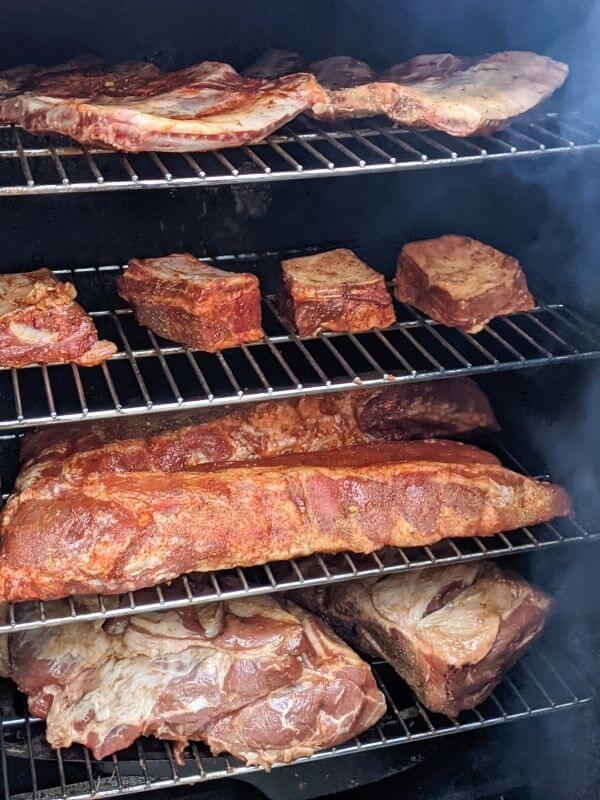
- Do not subject your friends and other guests to your first experiments with smoking meats.
- Instead- Practice several times and work through all of the variables that can go wrong first. They will certainly remind you of “that one time” every chance they get if you serve up bad bbq.
- Do not add your meat to the smoker if it is heated to the exact temperature that you plan to smoke at.
- Instead- set the smoker to about 25°F higher than needed as the meat will bring down the temperature rapidly when added. Adjust the fire to get back to the perfect temperature.
- There is no need to move your meat around or open the lid to take a look.
- Instead- Leave the meat alone and keep the temperature consistent inside the chamber.
- Never use lighter fluid to start your fire
- Instead- Use this chimney starter or some scrap paper and kindling and do it the old-fashioned way.
- Avoid wasting quality meat and throwing away money because you didn’t learn the basics of how to control your smoker.
- Instead- practice learning to control the fire and the temperature of the main cooking chamber several times before trying it with meat.
- Do not open the lid periodically to spray the inside of the smoker to increase humidity.
- Instead- place a pan of water in the smoker’s main chamber which will maintain consistent humidity.
- When the internal temperature of your meat inevitably “stalls” and stops rising, do not kick up the fire to speed things up.
- Instead- just be patient and keep your fire consistent. It takes time to get through this flatline in temperature increase.
- Do not guess the temperature inside of the smoker or the internal temperature of the meat.
- Instead- spend the money and get a probe thermometer that can temp multiple meats and the temperature of the smoking chamber at the same time.
- Do not use water to either control your fire or make more smoke. Soaked woodchips or wet wood lowers the temperature resulting in poor quality smoke.
- Instead- use quality dry wood and the smoker’s damper to control the heat.
Best Wood for Smoking Meats

The best wood for smoking meat will depend on where you live and what grows in your area. In Texas, the most popular is post oak whereas in Kansas City they mostly use hickory.
The reality is that oak that grows in California is very different and has a unique mineral composition from oak grown on the east coast.
The best option is to find out what types of wood are available in your area and experiment and see what works best and suits your palette.
| Type of Meat | Type of Wood |
| Whole Chicken | Oak, Hickory, Applewood, Cherrywood |
| Chicken Thighs | Oak, Hickory, Applewood, Cherrywood |
| Chicken Wings | Oak, Hickory, Applewood, Cherrywood |
| Turkey | Hickory, Cherrywood, Applewood |
| Baby Back Ribs | Cherrywood, Peachwood, Hickory |
| Spare Ribs | Cherrywood, Peachwood, Hickory |
| Prime Rib / Standing Rib Roast | Pecanwood, Oak, Hickory |
| Pork Butt / Pork Shoulder | Applewood, Cherrywood, Hickory |
| Pork Belly | Applewood, Cherrywood, Hickory |
| Beef Ribs | Hickory, Oak |
| Short Ribs | Hickory, Oak |
| Lamb Shoulder | Applewood, Cherrywood |
| Sausage | Applewood, Hickory, Oak, Pecanwood |
| Salmon | Applewood, Cherrywood, Oak |
| Brisket | Hickory, Oak |
1. Applewood
A delicately sweet and fruity aroma that works great with pork.
2. Hickory
This is one of the most popular woods for smoking because of its savory aromas and the mahogany color it imparts to meats.
3. Cherrywood
light and fruity smoke that is milder than other hardwoods. Cherrywood also imparts a red hue to smoked meats.
4. Oak
There are many regional varieties from Post Oak to Red Oak that are used in smoking. Each one has its own unique qualities that pitmasters swear by.
5. Peachwood
The smoke from peachwood is perfect for more delicate proteins that work better with a milder smoke like poultry or pork.
6. Pecanwood
This has the benefit of being a long-burning wood that is stable, but it is fairly pungent and best mixed with other wood.
7. Vine Branches
This is a fun option for smoking smaller items that do not need a long exposure to the smoke. This is because grapevine branches give off a pungent smoke that can get fairly intense.
FAQs

What is the easiest meat to smoke for beginners?
The best bet for any rookie at smoking is to start with sausages. Not only is it the most forgiving when it comes to timing, but it also has no prep as far as marinades, rubs, or brines.
What is the quickest meat to smoke?
BBQ smoking is all about slow and low and takes hours, but if you want to smoke something fast, stick with chicken or sausages that can cook in around 3 hours.
What meat can you smoke in 4 hours?
If you want to fire up the smoker, but you only have 4 hours, you will want to stick with meats like a whole chicken, chicken wings, chicken thighs, salmon, or sausage.
You can also smoke different cuts of beef like tri-tip or a thick steak that will be served mid-rare.
What is the best meat to smoke for a large group?
Most home smokers are relatively small compared to professional rigs meaning that space in the smoker is at a premium.
Stick with larger cuts that take up less rack space in relation to the volume of meat like pork butt or brisket.
What meats you should NOT smoke?
Avoid lean meats like chicken breast or pork loin that are lower in fat and have very little connective tissue that is necessary for making moist and tender smoked meats.
Final Thoughts: Best Meat to Smoke for Beginners
Now it is time for you to fire up the smoker and start prepping the meat for your next cookout.
If this is your first time smoking meat or are still learning the ropes, try out several of the best meats to smoke for beginners, and practice several times.
You will certainly make your neighbors jealous with delicious smelling aromas pouring out of your smoker.


![Smoking Sausages: How to Smoke Sausages [Easy Step by Step Guide]](https://cheftravelguide.com/wp-content/uploads/2022/05/how-to-smoke-sausages.-768x432.jpg)
![Brisket vs Tri Tip: Main Differences [Explained by a Chef]](https://cheftravelguide.com/wp-content/uploads/2022/05/brisket-vs-tri-tip_-1-768x432.jpg)