
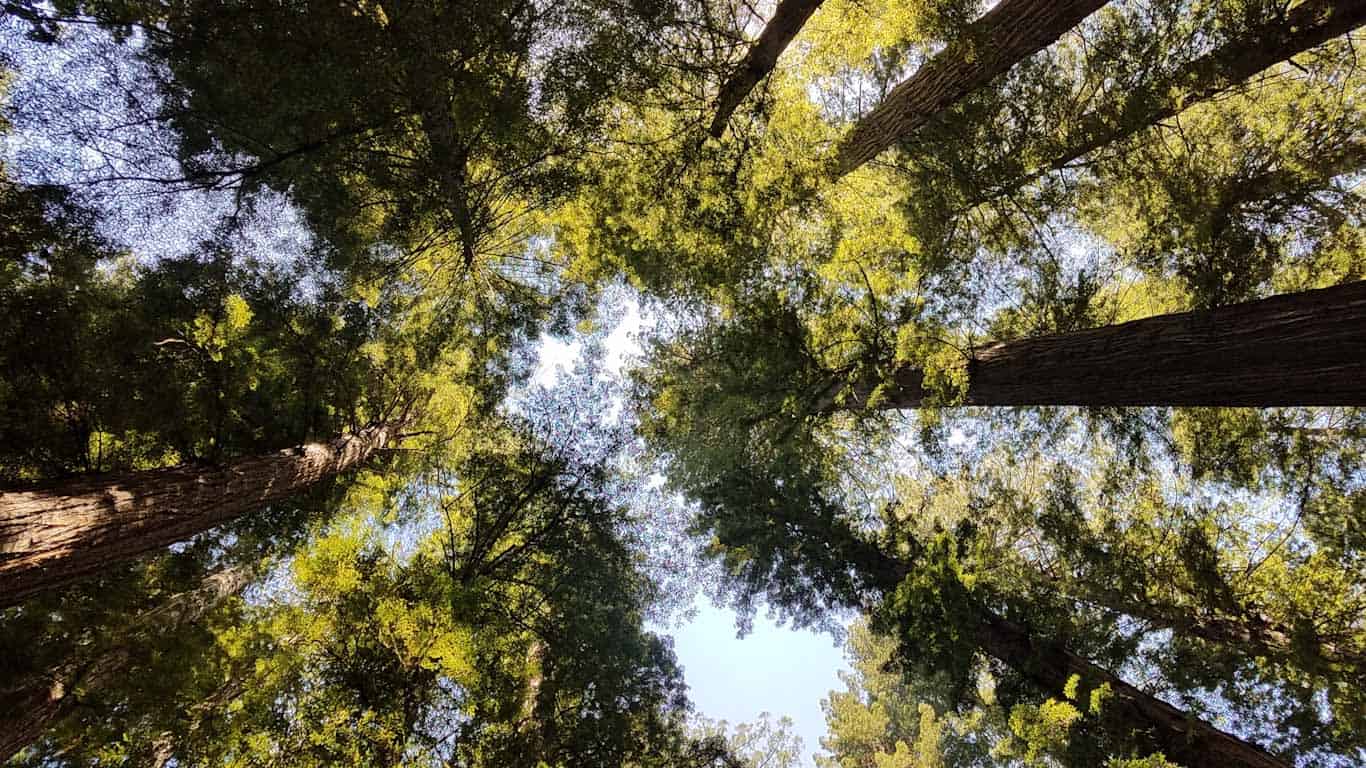
Are there Redwoods in Yosemite? [Where to Find Them]

KEY TAKEAWAYS
- The redwood groves in Yosemite National Park are Mariposa Grove, Tuolumne Grove, and Merced Grove.
- Mariposa Grove is the best one to visit and the biggest of the three, with over 500 mature giant sequoias.
- The redwood trees you will find in Yosemite are giant sequoias, not the coastal redwoods.
If you are wondering, “Are there redwoods in Yosemite?” then you came to the right place.
Not only are there redwoods in Yosemite, but they are giant Sequoias, the largest tree species in the world.
There are only a few places in California to experience these incredible trees, and Yosemite offers a chance to explore three groves of Sequoias.
We headed to Yosemite National Park to collect all the information you will need for a trip to see the Sequoias, including the best hiking trails, when to visit, and how to get around to see the groves.
Now dig in and get ready to learn everything you need to know for an incredible trip to experience the redwoods in Yosemite National Park.

Are there Redwoods in Yosemite National Park?
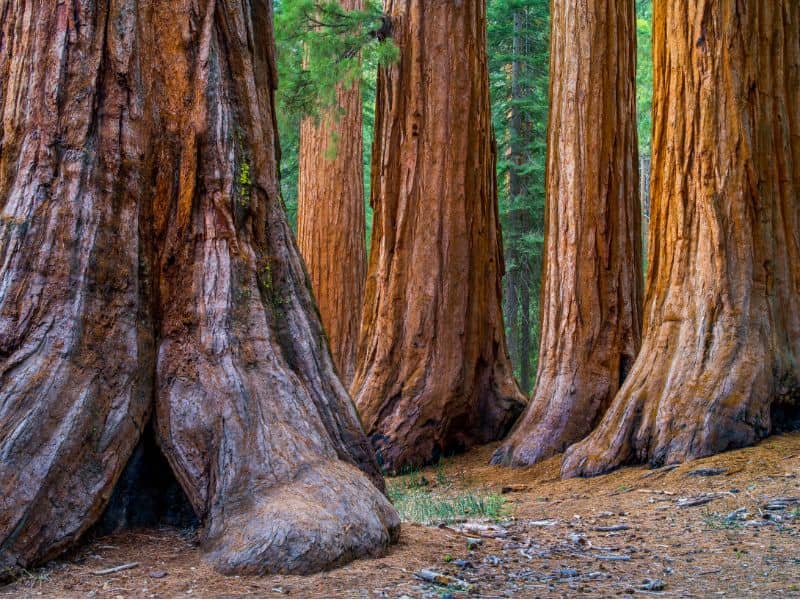
If you plan on visiting Yosemite and hope to see the majestic Giant Sequoias, you are in luck, as there are several groves to explore.
To see the largest species of trees in the world, all you will have to do is go for a short hike, and you will get an opportunity to stand next to nature’s skyscrapers.
It’s important to note that the redwood trees in Yosemite are the giant Sequoias and not the coastal redwoods which are the tallest in the world.
Sequoia trees only grow on the western slopes of the Sierra Nevada Mountains in central California and are occasionally referred to as Sierra Redwoods.
You will drop your jaw when you see these massive trees for the first time and stand close to the trunk that can be as big as 35 feet in diameter.
See our comparison between coastal redwoods and giant sequoias here.
Where are the Redwood trees in Yosemite National Park?
The ancient redwood trees in Yosemite are found in three groves inside the park, including Mariposa Grove, Tuolumne Grove, and Merced Grove.
Mariposa Grove, located near the south entrance of Yosemite, is the biggest of the three and has over 500 mature giant sequoias.
It’s about 34 miles from the attractions near the Yosemite Valley floor, but it is still the most visited grove among the three.
Tuolumne Grove and Merced Grove have about two dozen mature giant sequoias, and their trailheads are only eight minutes apart.
You can combine a trip to both groves if you have time, but Mariposa Grove is the best choice if you can only visit one.
📢LOCAL TIP: Find out the exact address of Yosemite National Park here.
Yosemite National Park Redwoods
Mariposa Grove

- Distance/Drive Time from Yosemite Valley Visitor Center: 75 minutes
- Reservations or Entrance Fees: None required
Mariposa Grove is the best place to see the redwoods in Yosemite, as it is the largest grove in the park.
The grove is home to over 500 mature giant Sequoias, including the largest trees in Yosemite.
The Mariposa Grove is located near the South Entrance of Yosemite and is easily accessible off of Wawona Road when the road is open for the summer season.
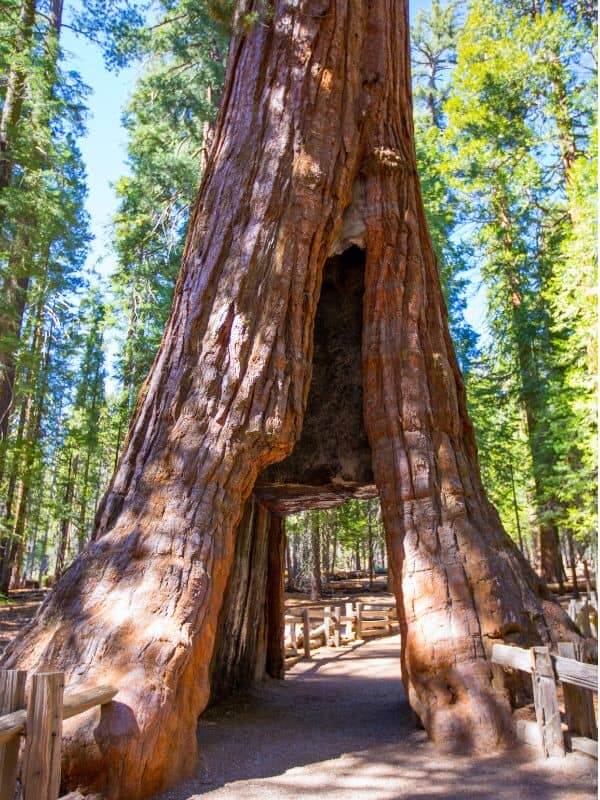
You’ll find numerous notable trees here, including the 3,000-year-old Grizzly Giant, the Bachelor, the Three Graces, the Fallen Monarch, and the California tree tunnel (Wawona Tunnel Tree).
Despite its popularity, this place rarely feels crowded because of its size.
You can choose from several hiking trails with varying degrees of difficulty, but remember that pets are prohibited.
There are no food services within Mariposa Grove, and drinking water is available only at the welcome plaza and arrival area.
Mariposa Grove Road closes to cars in winter, but the road and all trails are still open to hikers, snowshoers, and skiers.
- GETTING TO MARIPOSA GROVE
It takes about 75 minutes of drive from Yosemite Valley Visitor Center to get to Mariposa Grove.
If you’re staying near the Yosemite South Entrance, then you will have easy access to this redwood grove.
From there, you can either take the free shuttle or go on a hike. If you have a disability placard, you can enter a smaller parking area closer to the lower grove.
The free shuttle service departs from the Mariposa Grove Welcome Plaza near the South Entrance every 10-15 minutes and is available from early March through late November.
When we visited Yosemite in November, the shuttle was no longer running, so make sure to check the schedule, as it is dependent on weather and road conditions.
The shuttle service is unavailable during wintertime. However, you can still access the grove via a two-mile hike through the Washburn Trail or the Mariposa Grove Road.
🚌FREE SHUTTLE TO MARIPOSA GROVE SCHEDULE
- April 1 – September 7: 8:00 am – 7:00 pm
- September 8 – November 7: 8:00 am – 5:30 pm
- November 8 – November 30: 8:00 am – 3:30 pm
- December 1 – March 31: No shuttle service
🌳HIKING TRAILS IN MARIPOSA GROVE
- Big Trees Loop Trail – 0.3 miles, mostly flat
- Grizzly Giant Loop – 2 miles, 300 ft elevation gain
- Guardian’s Loop Trail – 6.5 miles, 1,200 ft elevation gain
- Mariposa Grove Trail – 7 miles, 1,200 ft elevation gain
Tuolomne Grove

- Distance/Drive Time from Yosemite Valley Visitor Center: 45 minutes
- Reservations or Entrance Fees: None required
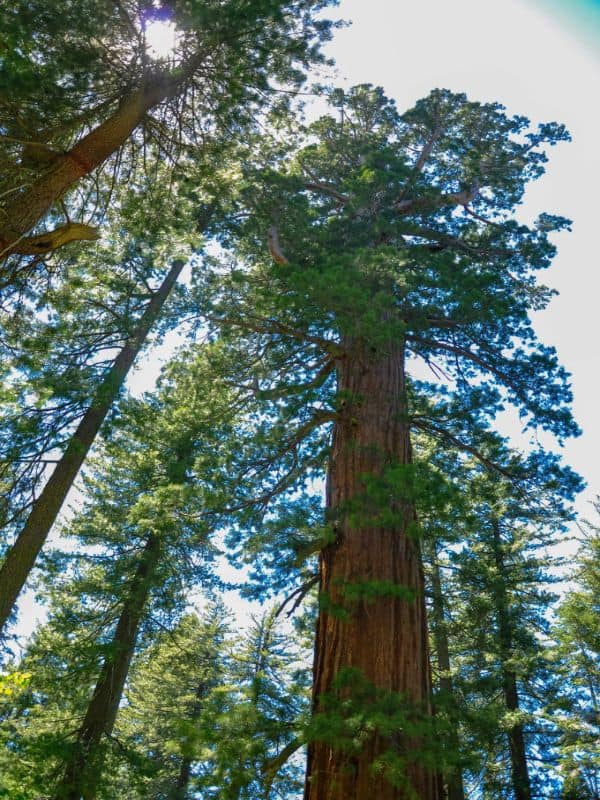
Tuolomne Grove may not be as famous as Mariposa Grove, but it’s still a great place to see and admire the beautiful ancient sequoia trees in Yosemite.
Located on Tioga Road just east of Crane Flat, it is home to nearly two dozen mature giant sequoias, including the famed Yosemite tree tunnel known as the Dead Giant Tunnel Tree.
Besides the Tuolumne Grove Trail, there’s a half-mile nature trail through the grove, starting at the Tunnel Tree, where you can learn more about these majestic trees.
It’s not as crowded here as Mariposa Grove, and it only has one hiking trail to get to the grove.
Also, no food and drinking water are available near the grove, so be prepared as the hike back includes some elevation gain.
- GETTING TO TUOLOMNE GROVE
It takes about 45 minutes of drive time from Yosemite Valley Visitor Center to get to Tuolumne Grove.
The only way to get to the grove is by hiking the Tuolumne Trail. Make sure to arrive as early as possible because parking is extremely limited.
Bikes are also not allowed on the hiking trail.
🌳TUOLOMNE GROVE HIKING TRAIL
- Trail: 2.7 miles out & back, 500 ft elevation gain
- Estimated Time: 1-2 hours
The Tuolumne Trail is a 2.7-mile out-and-back trail surrounded by sugar pines and white firs that takes about one to two hours to complete.
Because the trail drops 500 feet into the grove, the uphill portion back to the parking lot is fairly strenuous.
This trail is a popular wintertime hike for snowshoers and hikers looking for a trek in the snow.
Pets are only allowed on the paved trail but not the side trails in the grove.
Merced Grove
- Distance/Drive Time from Yosemite Valley Visitor Center: 45 minutes
- Reservations or Entrance Fees: None required
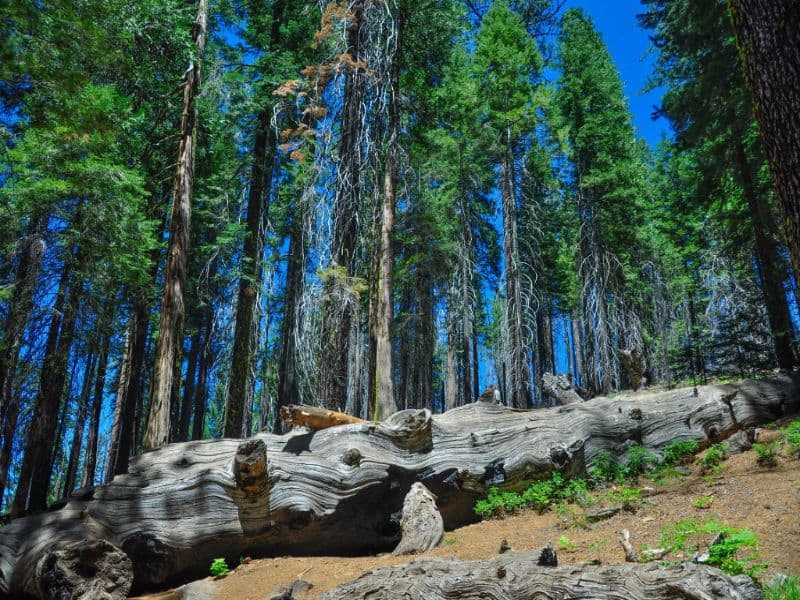
Merced Grove is located on the Big Oak Flat Road east of Big Oak Flat Entrance and is the smallest of Yosemite’s three Giant Sequoia groves.
It’s home to approximately 20 mature giant sequoias, and the hike to the grove has a 520-foot drop, similar to the Tuolomne Grove.
This is also the least crowded and quietest among the three sequoia groves in Yosemite.
Inside Merced Grove is an old ranger patrol cabin, the former summer retreat of park superintendents, which is part of the grove’s history.
While the sequoias here are beautiful all year round, springtime is when the beautiful dogwoods and wildflowers bloom. We loved our visit to Yosemite in March for this reason.
Like the other groves, no drinking water or food is available inside the grove, so you’ll need to show up prepared for the hike.
However, picnic tables are at the trailhead, so you can eat and rest there before hiking.
- GETTING TO MERCED GROVE
From the Yosemite Valley Visitor Center, it takes about 45 minutes of driving time to get to the Merced Grove trailhead, which is marked by a sign.
Parking here is extremely limited, so come early or be prepared to wait.
🌳MERCED GROVE HIKING TRAIL
- Trail: 3 miles out & back, 520 ft elevation gain
- Estimated Time: 1-3 hours
The Merced Grove Trail is a 3-mile out-and-back trail that takes about one to three hours to finish.
The first half mile is straightforward and easy, but a steep one-mile descent into the grove follows it.
The downhill portion makes it an easy hike, but the 520-foot elevation gain back to the trailhead is much more challenging. Pets and bikes are also not allowed on this trail.
Best Time to Visit the Redwoods in Yosemite National Park

While the redwoods in Yosemite are amazing throughout the different seasons, springtime is a great time to see the beautiful dogwoods and wildflowers bloom.
All groves are open year round, but the trails may be snowy or icy during wintertime.
For the best weather, the best time to visit is during summertime.
The weather during this tourist season is dry, and rain is rare, making this a popular time for visitors.
The best time to avoid crowds is during the late spring and early fall when kids are in school.
Tips for Visiting the Redwoods in Yosemite
- Arrive early
It can be challenging to find parking, especially during peak season. Tuolumne Grove and Merced Grove have limited parking spaces, and Mariposa Grove attracts many visitors, and parking spaces get filled up by late morning.
- Dress for the occasion
It’s usually cold inside these redwood groves, so wear a good hiking shirt, and bring jackets and layers to keep warm.
Comfortable hiking shoes are a must, as you’ll likely be hiking for a few hours. Bring rain jackets and durable snowshoes if you visit during the rainy season and winter months.
- Pack wisely
Packing a light day pack with options for layering. No food or drinking water is available near the groves, so show up prepared.
Pack wisely based on the season you plan to visit the Redwoods.
- Respect mother nature
While exploring and visiting these redwood groves, always leave no trace and respect mother nature.
Stay on the trails, and avoid trampling on vegetation or other plants. Dispose of your waste properly, leave what you find, and give the wildlife space.
Most importantly, don’t deface or vandalize these amazing sequoia trees.
- Download an offline map or bring a paper map
There is little to no cell reception inside these redwood groves, so download an offline map in advance or bring this paper map before going inside to avoid getting lost.
While the trails are relatively easy, well-marked, and well-maintained, you can still get lost, especially when hiking alone.
Redwoods vs. Sequoias
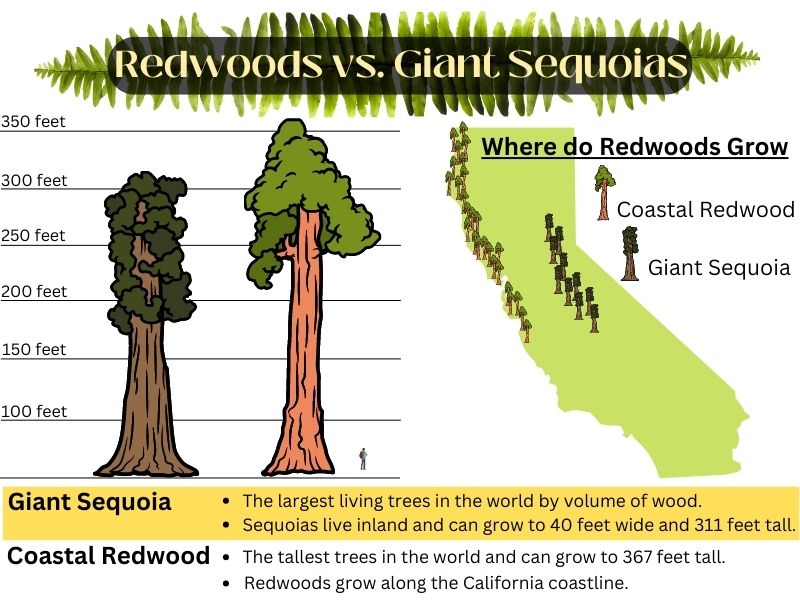
While Coastal Redwoods are the tallest trees in the world, Sequoias are the biggest.
The biggest difference between these two species of trees is where they grow and thrive.
Coastal Redwoods can grow as tall as 379 feet and have a diameter of up to 26 feet, while the biggest Sequoias will reach 270 plus feet but are much wider at up to 35 feet in diameter.
Coastal Redwoods only grow along the Pacific Ocean from Northern California to Southern Oregon, where the temperatures stay moderate, and there is plenty of winter rain.
Sequoias only grow in the central Sierra Nevada Mountain Range at elevations of 5000 to 7000 feet and require the dry summer heat in the region for their seeds to release from the cones.
When most people think of redwoods, they usually visualize Coastal Redwoods and forget that Giant Sequoias are also a type of redwood.
Giant Sequoias are listed as an endangered species and are lesser known than Coastal Redwoods as there are lower numbers and are only in remote National Parks away from major city centers.
Make sure to experience both species of these beautiful and massive redwood trees when visiting California.
| Giant Sequoias | Coast Redwoods | |
| Age | 3000 years | 2000 years |
| Height | 314 ft (96 m) | 379 ft (115 m) |
| Diameter | 30 ft (9 m) | 26 ft (8 m) |
| Common Names | Sequoia, Sierra Redwood, Big Tree | Redwood, Coast Redwood, California Redwood |
| Habitat/Climate | Cool, dry atmosphere | Warm, humid atmosphere |
| Location | Western Slope of Sierra Nevada mountains | Northern California Coast and Southernmost Coastal Oregon |
| Largest Tree | General Sherman at Sequoia National Park | Founder’s Tree at Humboldt Redwoods State Park |
Other places to see the Redwoods near Yosemite
Kings Canyon and Sequoia National Parks are the closest redwoods near Yosemite to see Giant Sequoias.
The drive to Sequoia from Yosemite is about 3.5 to 4 hours with some beautiful stops along the way.
These parks are home to thousands of Giant Sequoias, and you’ll find 20 groves, including the famous Giant Forest, Muir Grove, and the Redwood Meadow Grove.
The largest trees in the world are located in these parks, including the General Sherman and General Sherman trees.
Coastal Redwoods can be found closer to the Pacific Ocean at these state parks like Henry Cowell Redwoods State Park, Big Basin State Park, and Bear Creek Redwoods.
All three are about a four-hour drive from Yosemite, and Big Basin State Park is where you’ll find several well-known trees like the Mother Tree and the Santa Clara Tree.
If you’re starting your trip to Yosemite from San Francisco, make sure to check out Muir Woods National Monument.
FAQs: Redwood Trees in Yosemite
How far are the redwood trees from Yosemite?
There are three groves of Sequoia Redwoods inside Yosemite National Park, all less than an hour’s drive from the main attractions in the valley.
The second closest option for seeing the Sequoia Redwoods is Kings Canyon and Sequoia national parks, just over four hours south of Yosemite.
Are sequoias and redwoods in the same place?
No, Sequoias and Coastal Redwoods grow in very different climates and regions in California.
Sequoias grow at 5000 to 7000 feet in elevation in the central Sierra Nevada Mountain Range, while Coastal Redwoods only grow along the Pacific Ocean from Central California to Southern Oregon.
Are redwoods and sequoias the same?
Yes and No. Sequoias are a type of redwood tree, but they are not the same as Coastal Redwoods, which grow in completely different regions and climates.
Both species grow almost exclusively in California, but Sequoias thrive in the central Sierra Nevada Mountains, while Coastal Redwoods grow only near the coast.
Sequoias are the largest trees in the world, while Coastal Redwoods are the tallest.
Are the redwoods in Yosemite?
Yes, there are redwoods in Yosemite, including three groves of Giant Sequoias.
The massive trees can be found in the national park in the Tuolomne, Wawona, and Merced Groves.
The park is home to over 500 Sequoias, which are the largest species of trees in the world.
What is the largest tree in Yosemite National Park?
The largest tree in Yosemite National Park is the Grizzly Giant, which has a circumference of over 96 feet and stands at a height of 209 feet.
This massive Sequoia is estimated to be between 2000 and 3000 years old, and it is protected by a two-foot thick layer of bark.
Visitors will want to head to the Mariposa Grove and hike the .25-mile trail from the shuttle drop-off and parking area to visit the Grizzly Giant.
Are there giant sequoias in Yosemite?
Yes, there are over 500 giant Sequoias in Yosemite, which can be found in three separate groves in the national park.
The largest Sequoia in the park is the Grizzly Giant, located inside the Mariposa Grove, 30 miles south of the Yosemite Valley.
You can find giant Sequoias in Yosemite in the Tuolumne, Merced, and Wawona groves.
Are there giant redwoods in Yosemite National Park?
Yes, there are giant redwoods in Yosemite National Park.
The species of redwoods found in Yosemite are giant Sequoias (Sequoiadendron giganteum), and over 500 are growing in the park.
While giant Sequoias are the largest trees in the world, they are often confused with Coastal Redwoods, the tallest tree species.
Is the Grizzly Giant tree still standing?
Yes, the Grizzly Giant still stands in the Mariposa Grove in Yosemite National Park.
The Grizzly Giant is alive and well and has been growing in the park for an estimated 2000 to 3000 years.
This massive tree can be found inside the Mariposa Grove, 30 miles south of the Yosemite Valley, near the towns of Wawona and Fish Camp.
Yosemite Valley Quick Facts
- Fees: $35 per car, valid for 7 days
- Reservations: Required at certain times of the year
- Best Time to Visit: Yosemite in the Spring is the best time to go when the waterfalls are gushing and the summer crowds haven’t arrived yet. Summer is the peak season if you want a guarantee of good weather.
- Where to Stay: The Yosemite Valley View in Foresta or Tenaya Lodge in Fish Camp for better availability.
- Getting there: The airport nearest Yosemite is Fresno Yosemite International which is 35 miles away. For the best flight deals, use Skyscanner to browse various airlines and prices.
- How to Get Around: Having your car is the easiest way to get around, especially if you’re visiting other nearby sights. Check RentalCars.com to find the best deals on rental cars.
- Best Self-Guided Tour: This audio tour from GyPSy Guide provides engaging commentary to make your trip more fun and interesting at such an incredible price!
- Insider Tip: Make sure to get the America the Beautiful National Park Pass for only $80 which allows entry to over 400+ national park sites valid for an entire year.
Wrap-Up: Does Yosemite have redwoods?
Not only are there redwood trees in Yosemite, but there are three groves with over 500 trees to see from the park’s beautiful trails.
Now take all this knowledge you have gained about these big trees in Yosemite, and wow your family and friends with fun facts as you check out these 270-foot-tall trees.
Now book a cabin in Yosemite, and prepare for an adventure to Yosemite, one of the nation’s top treasures.


![16 Best Pet Friendly Yosemite Cabins 2023 [Convenient Locations]](https://cheftravelguide.com/wp-content/uploads/2023/02/pet-friendly-yosemite-cabins_-768x431.jpg)
![Where is Yosemite National Park [Exact Address, Entrances & Tips]](https://cheftravelguide.com/wp-content/uploads/2023/06/El-Capitan-Yosemite_-768x576.jpg)
![23 Best Cabins in Yosemite in 2023 [Where to Stay Inside the Park]](https://cheftravelguide.com/wp-content/uploads/2023/02/best-cabins-in-yosemite-1_-768x432.jpg)
![10 Closest Airports to Yosemite National Park [2023]](https://cheftravelguide.com/wp-content/uploads/2022/07/closest-airport-to-yosemite_-768x432.jpg)
![Best Cities and Towns near Yosemite [Where to Stay Outside Yosemite]](https://cheftravelguide.com/wp-content/uploads/2022/09/Yosemite_National-Park__-768x432.jpg)